

Archaeological Field Evaluation, Hackney
Before London, this area was visited by early humans living in an era when mammoths roamed the landscape. Discoveries of made in 1878-1909 on nearby Stoke Newington Common by the renowned archaeologist W. G. Smith proved the area to be of exceptional importance, where concentrations of flint tools denoted Lower Palaeolithic ‘working floors’ preserved under brickearth, which contained large quantities of flint hand-axes and other flintwork alongside mammoth bones, antlers, shells, plant remains and some birch stakes and yew fragments.
In Brief
Archaeological Field Evaluation
Archaeological Observation
Geoarchaeology/Quaternary Science
Key Points
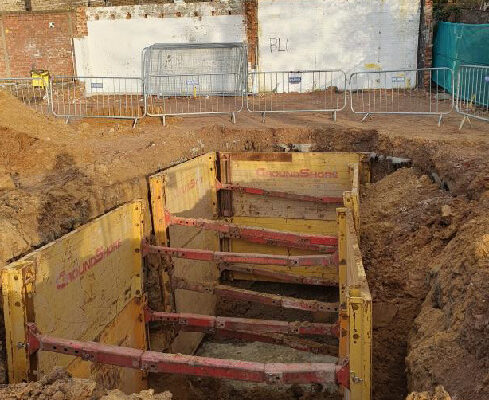
- Archaeological evaluation trenching; Geoarchaeological Test-Pits & Borehole Survey; Sedimentary & Geochemical Analysis; Deposit Modelling & OSL Dating
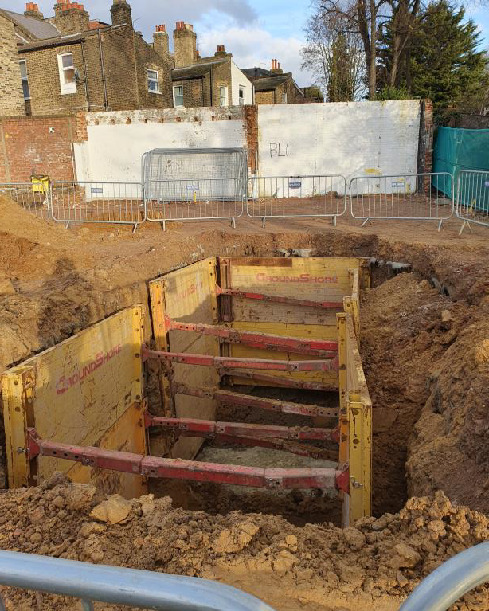
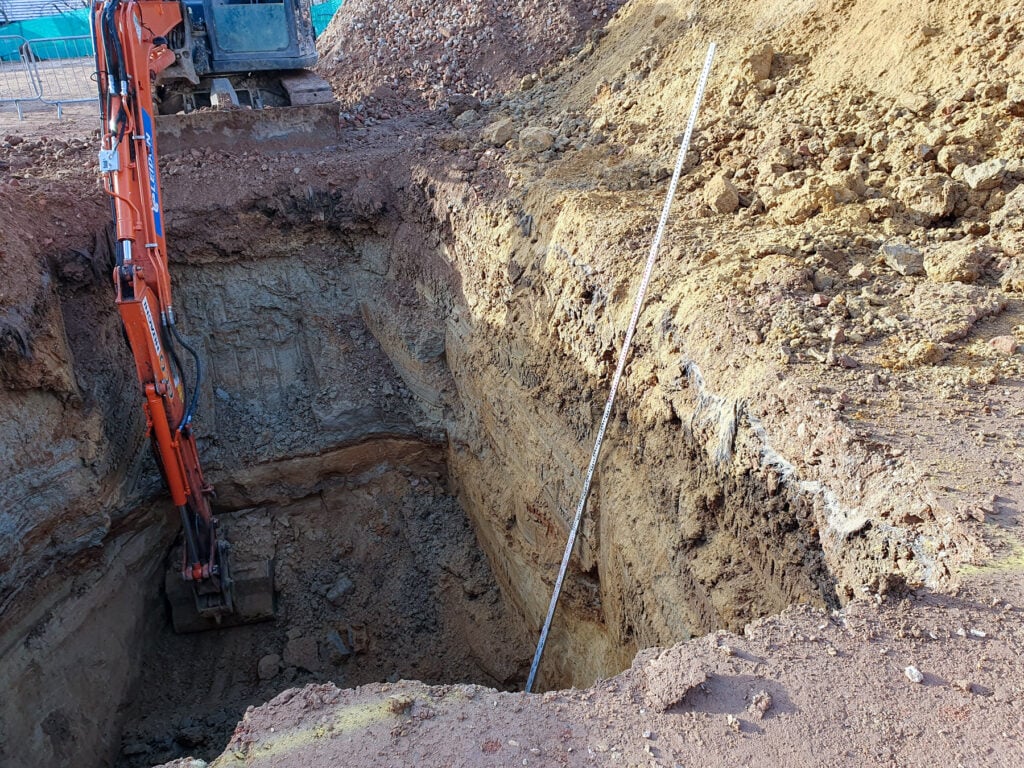
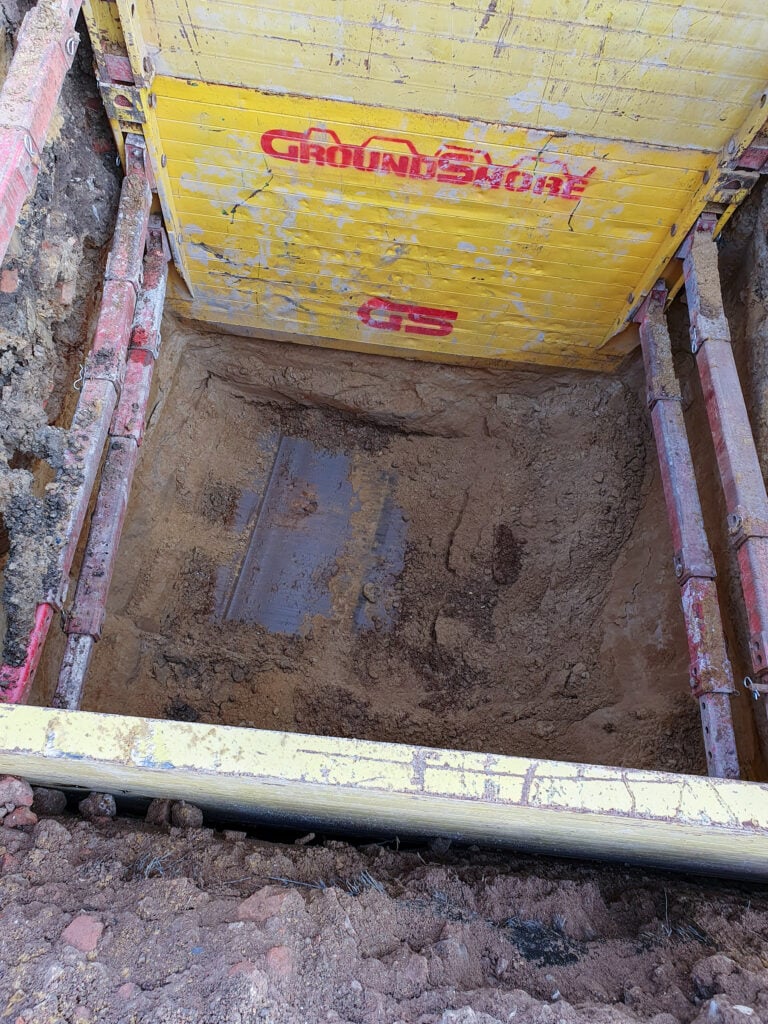
- Deep excavation – trenching to c5mbgl
- Areas of high archaeological/palaeoenvironmental potential, including deposits of high Palaeolithic/Mesolithic potential.
Summary
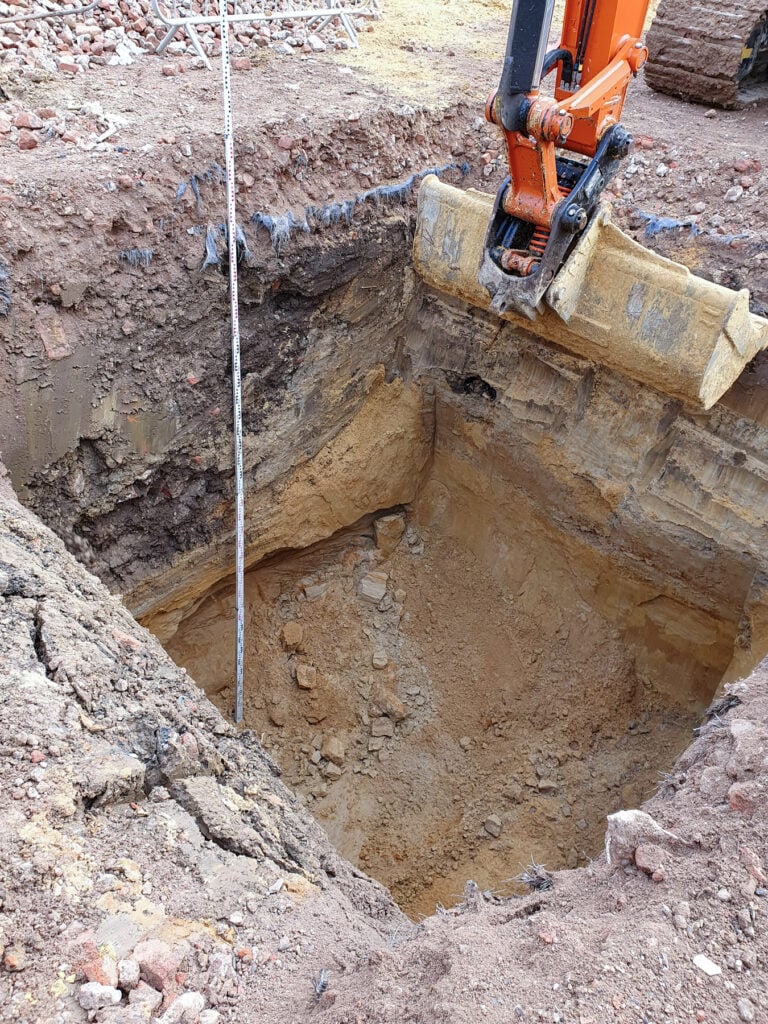
Further discoveries proved this to be an area rich in evidence for early human occupation associated with the Pleistocene Hackney Gravels and Stoke Newington Sand overlying London Clay bedrock. When proposals came forward to build a new NHS surgery on a former light industrial site, a comprehensive programme of Archaeological and Geoarchaeological investigation, analysis and dating was therefore required to identify any areas of high archaeological/palaeoenvironmental potential, specifically to include deposits of high Palaeolithic/Mesolithic potential.
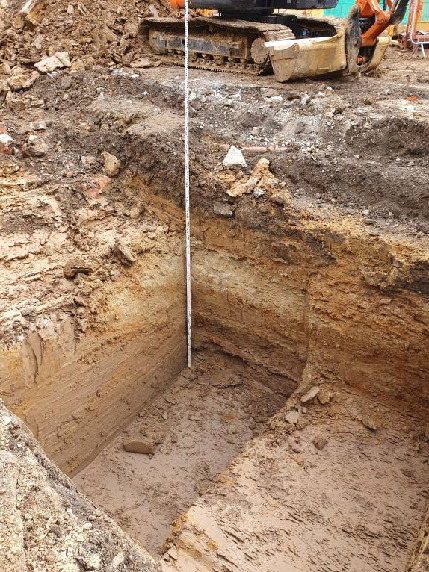
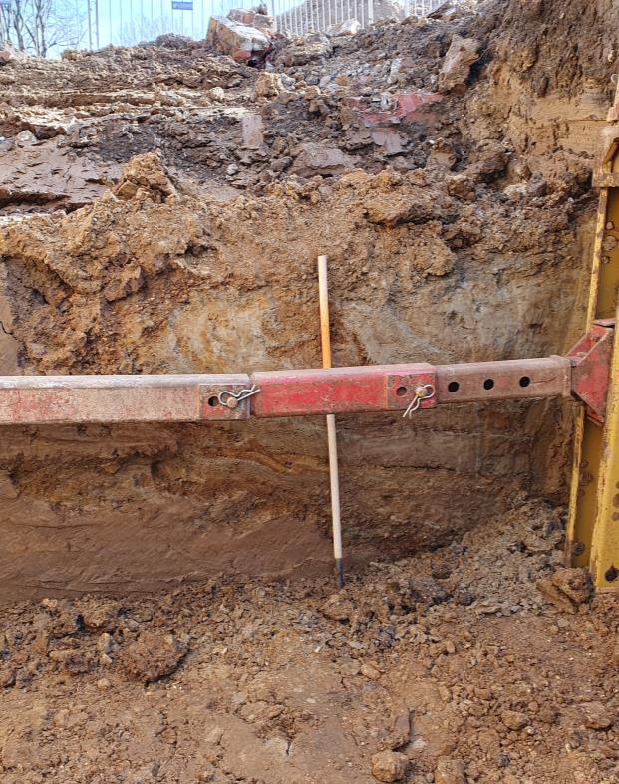
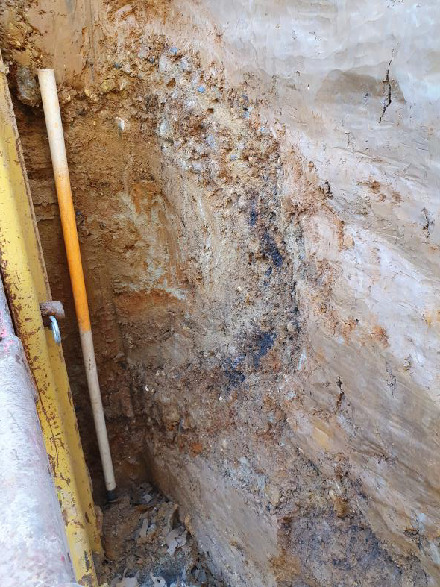
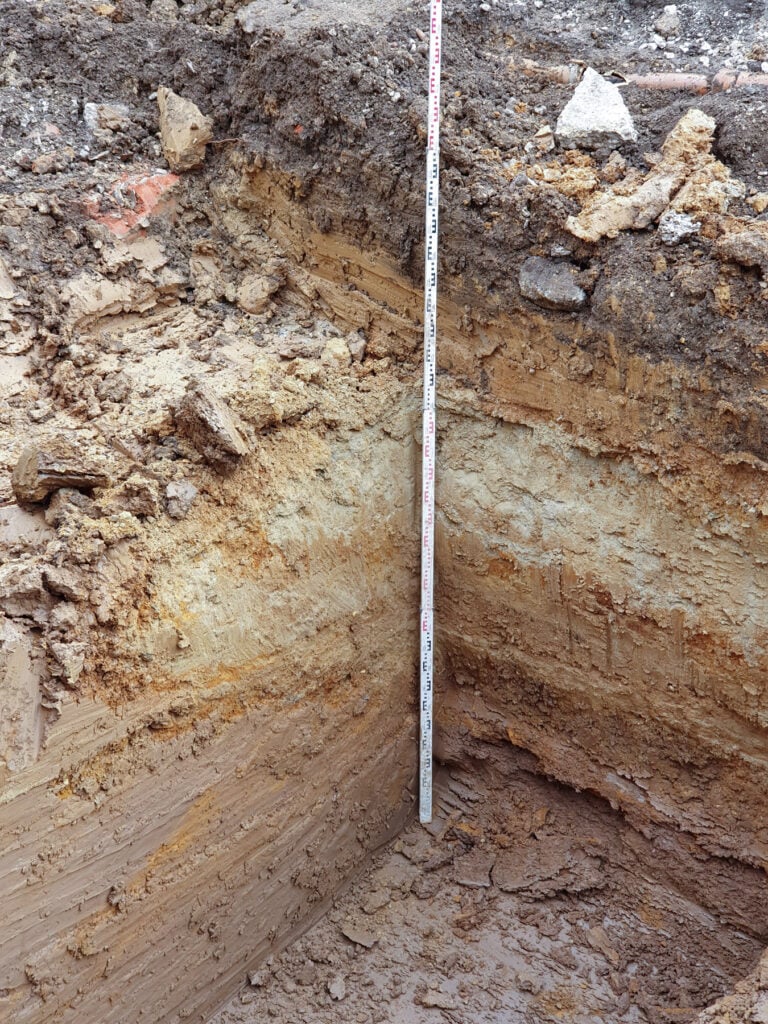
The investigations showed that late 19th and 20th century development had wholly truncated any underlying deposits, with made ground directly overlying Pleistocene sedimentary deposits, which remained largely unaffected.
The London Clay was observed across the site at a level of 22.30m AOD in the south, gradually rising to 22.70m AOD in the centre, before forming a steep bluff rising to 26.95m AOD along the northern edge of the site. The bluff appeared to form the northern extent of the Hackney Gravel terrace channel interpreted as the former course of the Pleistocene Hackney Brook, which was traced for c.12m along the northern edge of the site.
Results
Geoarchaeological evaluation produced valuable evidence relating to the location and composition of the Pleistocene deposits in the Stoke Newington area, which are recognized as being at least of national significance due to previous finds of Palaeolithic implements. The site was subsequently released for development.