

Archaeological Excavation, Presteigne
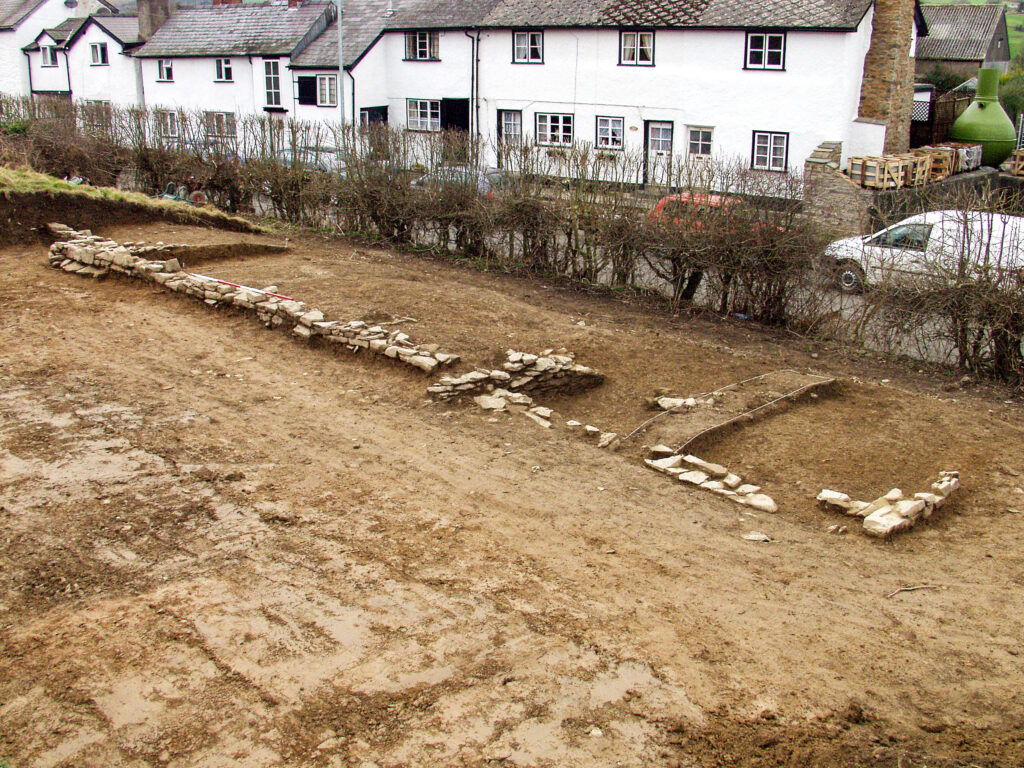
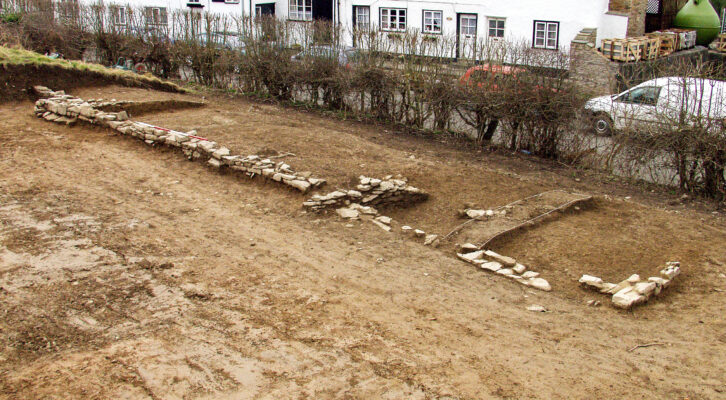
In advance of residential development, we undertook Archaeological Excavation of an area of undeveloped pasture off Scottleton Street. This revealed the remains of a building probably dating from the late fifteenth century, a period of prosperity and urban expansion for Presteigne.
In Brief
Key Points
- From the Archives
- Remains of a building from the 15th century which was likely destroyed by fire during the 17th century
- Finds of note included three sword pommels and two fragments of chain mail
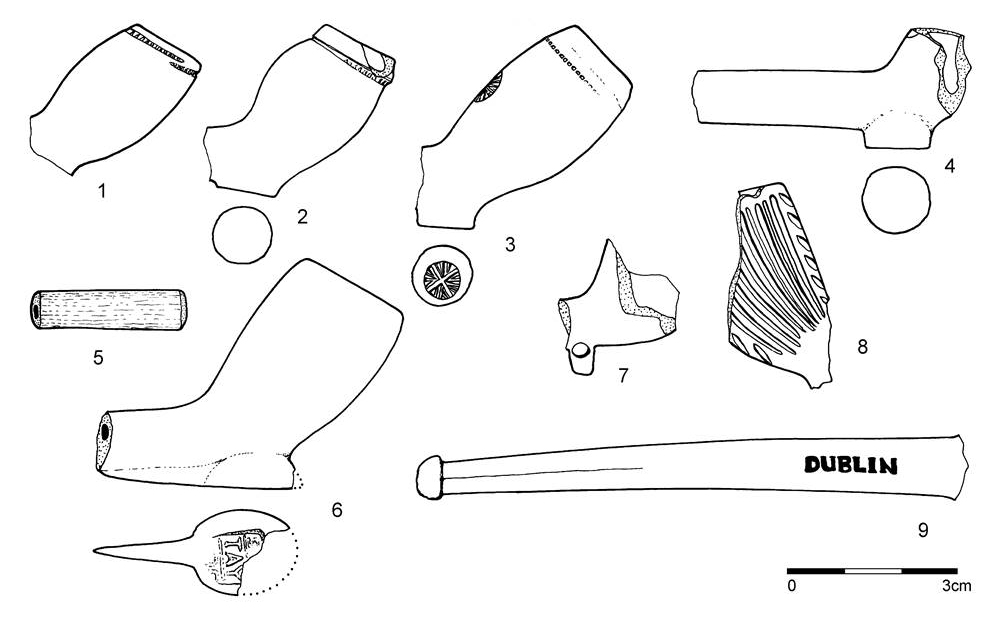
- A small but important assemblage of clay tobacco pipes was uncovered with a broad date-range from c.1640-1900
Summary
The site comprised an area of undeveloped pasture situated on the western periphery of the historic town of Presteigne, in view of which its archaeological potential was considered high, as a previous evaluation had revealed the well-preserved remains of a late medieval structure, then interpreted as a smithy.
A programme of open-area excavation was thus undertaken in order to excavate and preserve by record all archaeological materials, features, earthworks, structures and finds.
Results
Six distinct phases of activity were identified during the excavation of the site:
Phase I – the earliest deposit was a yellowish-grey silty clay immediately overlying natural gravels and excavated to a maximum depth of 0.4m. Sealing it was a further deposit of yellowish-grey silty clay which was similar but contained charcoal inclusions suggesting a period of activity predating any structural evidence.
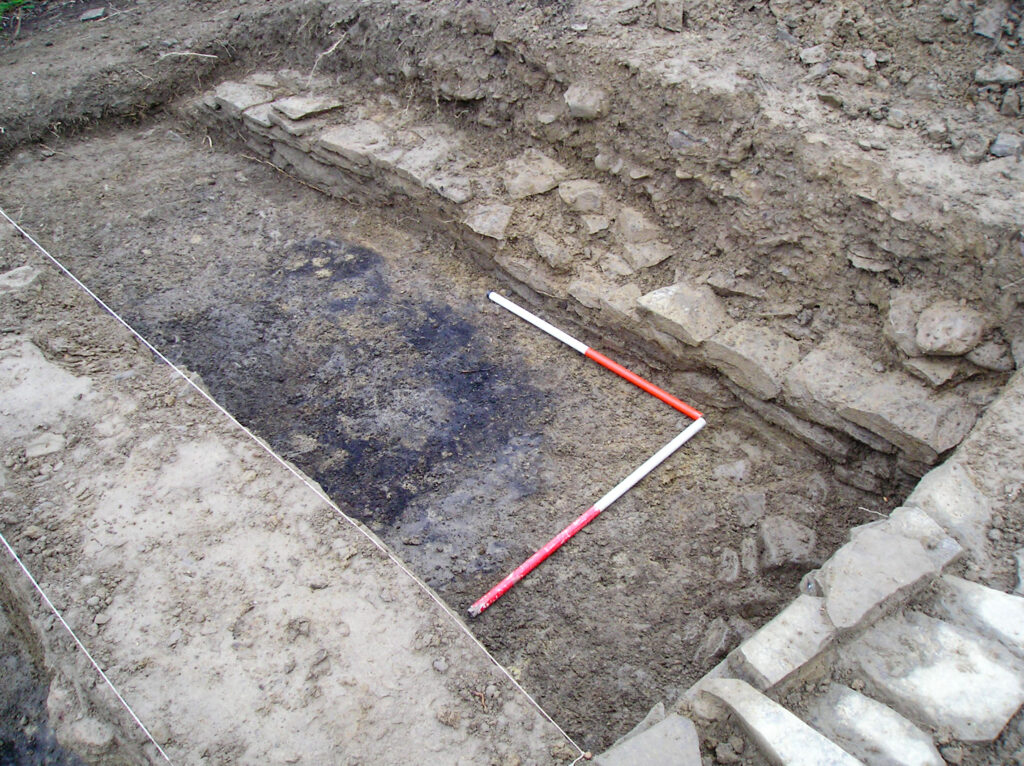
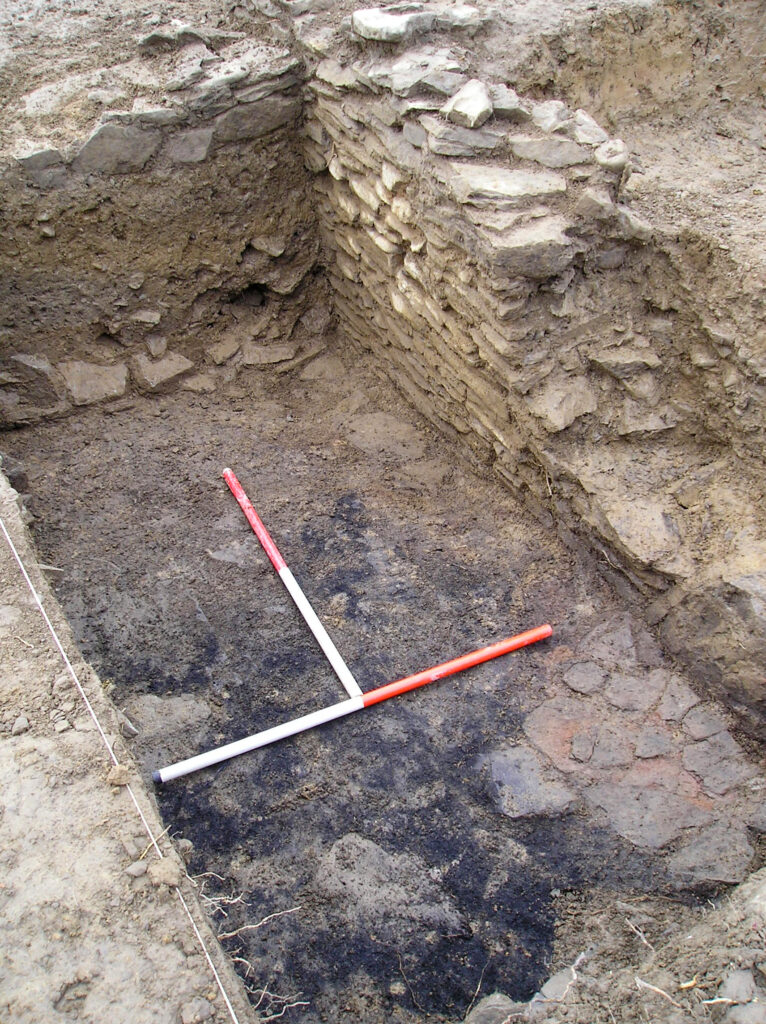
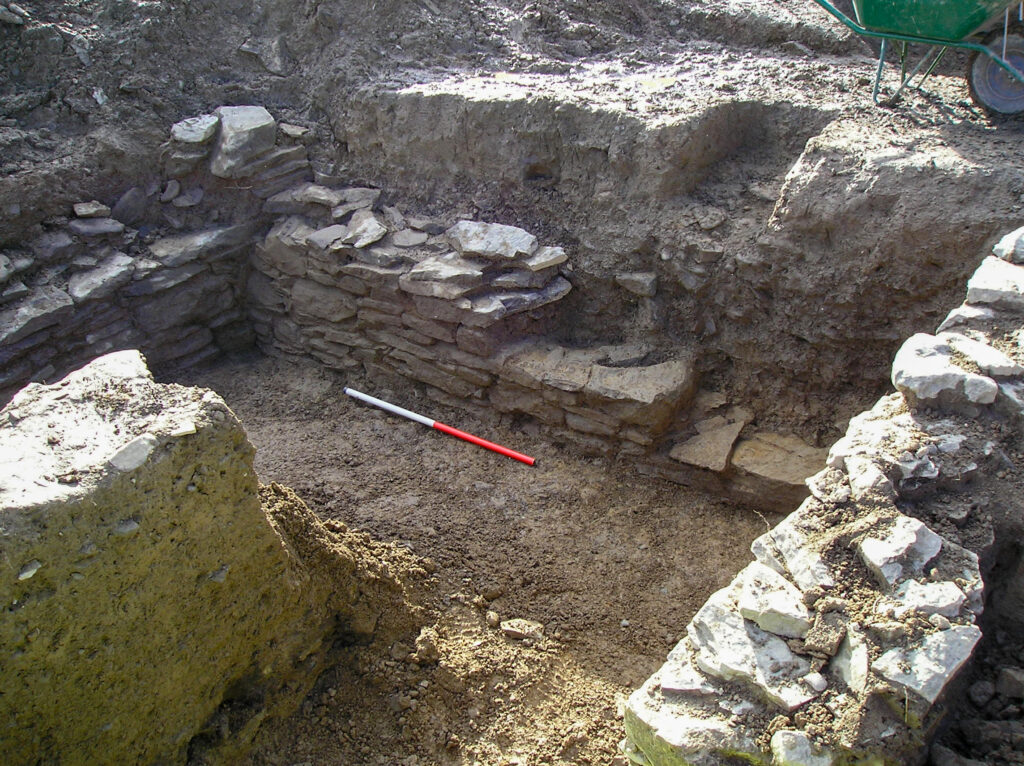
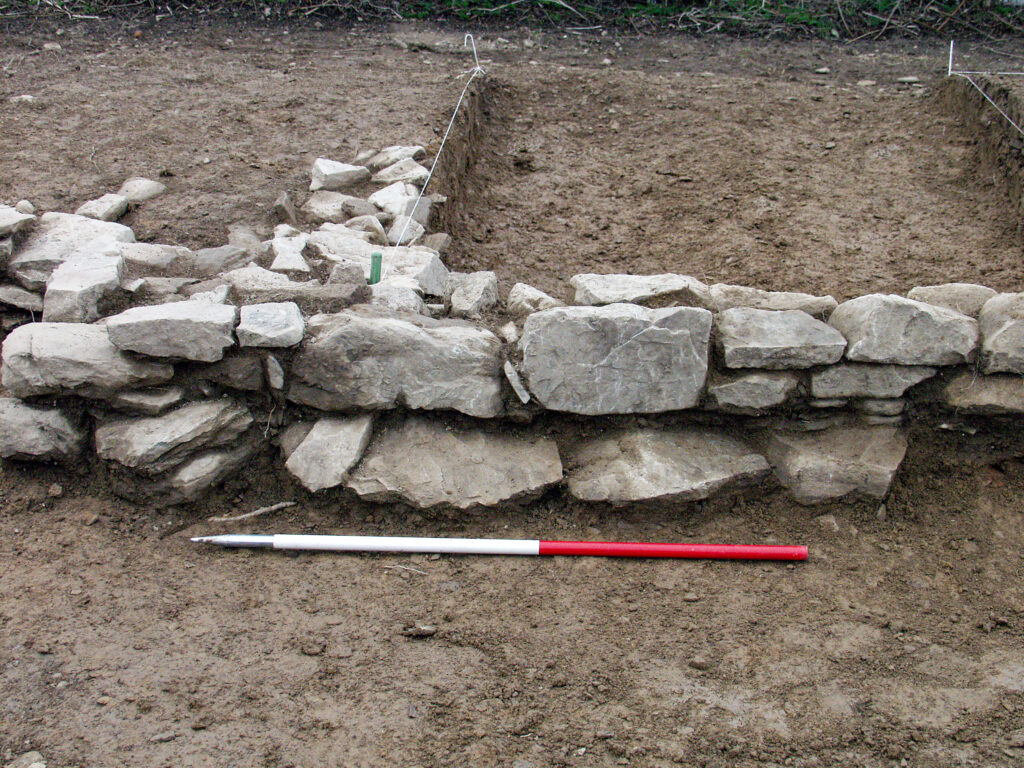
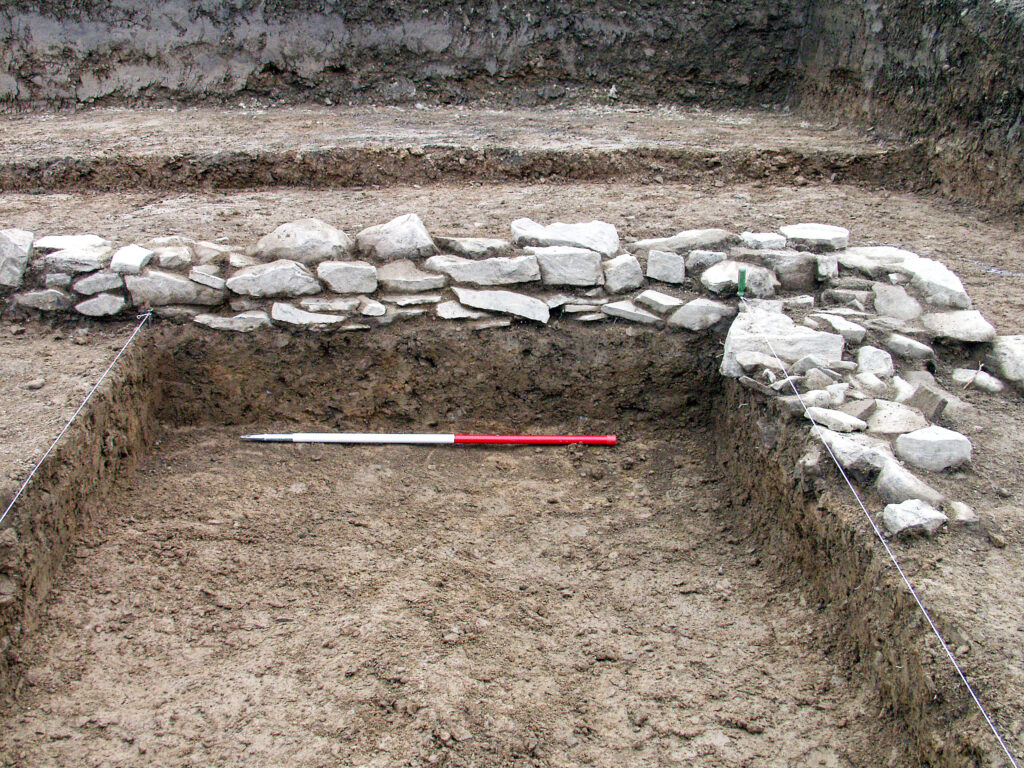
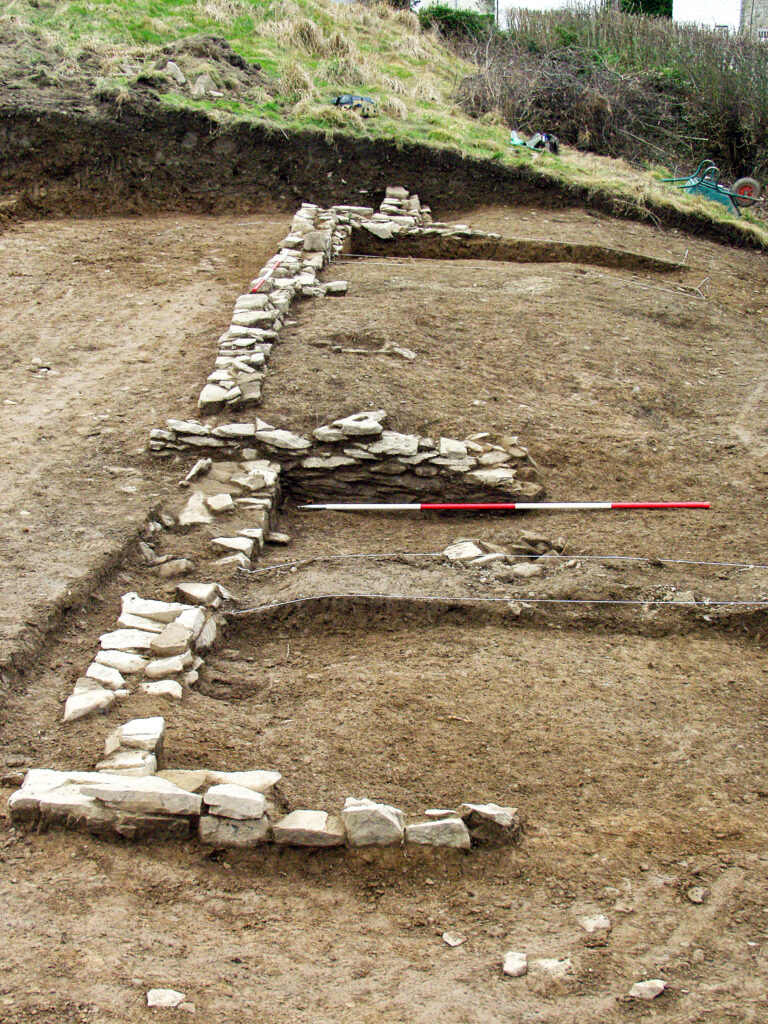
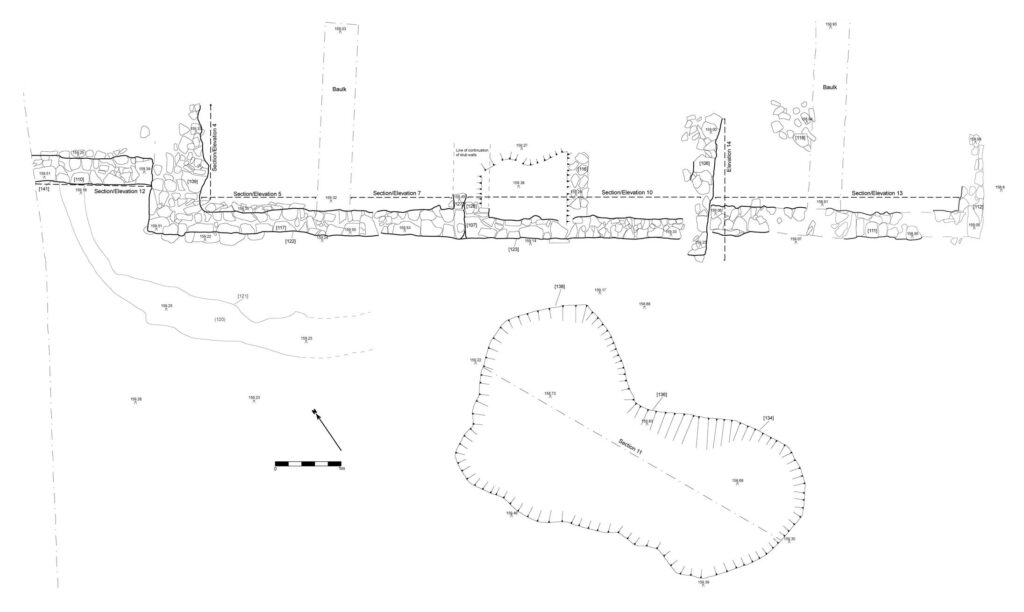
Phase II – cutting into the hillwash deposit were two construction cuts. The western cut was made for the construction of a wall with a visible height of 1.46m and a width of 0.44m. A single sherd of 17th century pottery was recovered from this wall. The cut to the east was for the construction of another wall and had a visible height of 1.1m and a width of 0.45m.
At the NE extent was what appeared to be a set of steps leading into the space defined by walls and a possible undercroft. The steps survived to a height of 0.8m and appeared to be regularly coursed and again bonded by yellowish-grey silty clay. Contained within the structure was a cohesive pale grey and brown mottled clay, representing a probable occupation or floor layer. The pottery analysis suggests a 17th century date; sherds of probable 16th century date were also identified in this context together with three iron objects of probable early post-medieval date, which upon further analysis were identified as being a sword pommel and two fragments of chain mail.
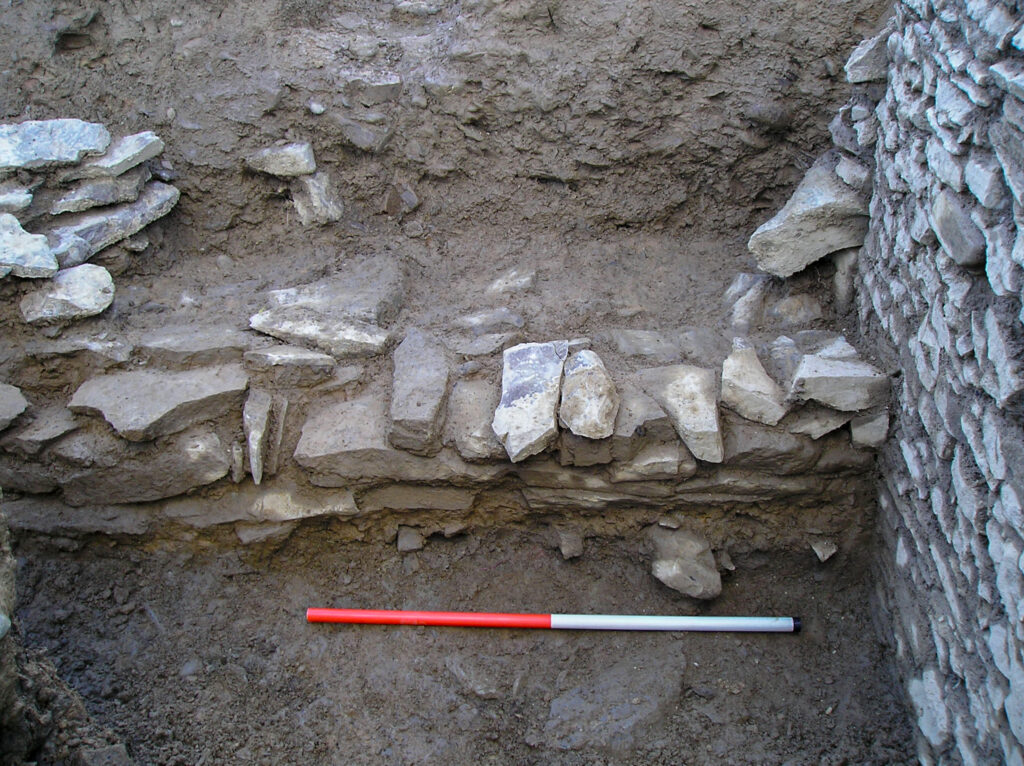
Phase III – subsequent to the deposition of the occupation layer, an internal wall was constructed. Similar to other walls uncovered on the site, it comprised undressed stone bonded by yellowish-grey silt clay and this walling may represent an internal feature, such as a bench or sill.
Phase IV – it is probable that the occupation/use of the structure ended dramatically. Contained within the walls was a cohesive dark grey – brown/black clay silt containing frequent charcoal inclusions, probably representing an episode of intense burning which may have resulted in the destruction of the building. The pottery evidence suggests a 17th century date for this event. Two iron objects, later revealed to be sword pommels, were also recovered from this deposit. It is likely that a period of abandonment followed the fire and resulting demolition of the structure.
Phase V – a construction phase followed the period of abandonment. Three wall stubs were uncovered, the first of which was keyed into the western extent of one of the walls. This stub appeared to be orientated NE-SW and may have been faced to the SE. Analysis of clay pipe fragments excavated suggested a late 18th or early 19th century date.
Phase VI – these structures were eventually partially demolished or collapsed following a period of abandonment. Rubble-based deposits were identified across the site and the pottery and clay pipe material from these deposits produced some general dating evidence. The pottery suggests a 17th century date (a single sherd of 13th century pottery was also identified), which is corroborated by the clay pipe evidence, with the latest stem dating to the late 17th / early 18th century.