

Archaeological Mitigation, Cricklade
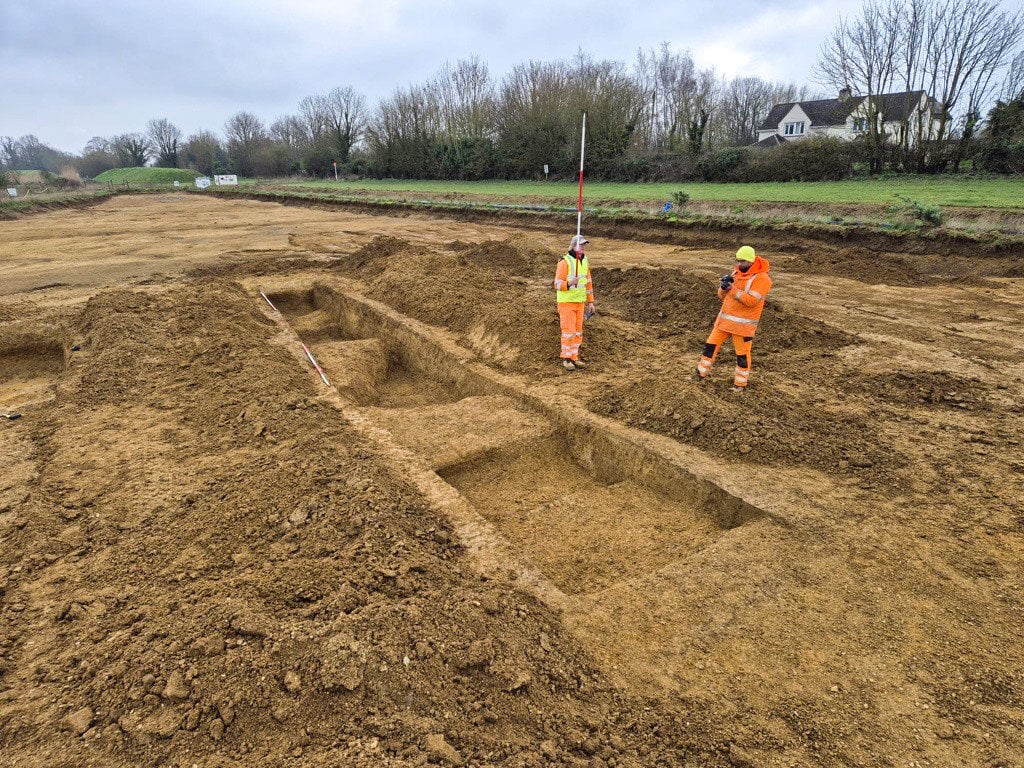
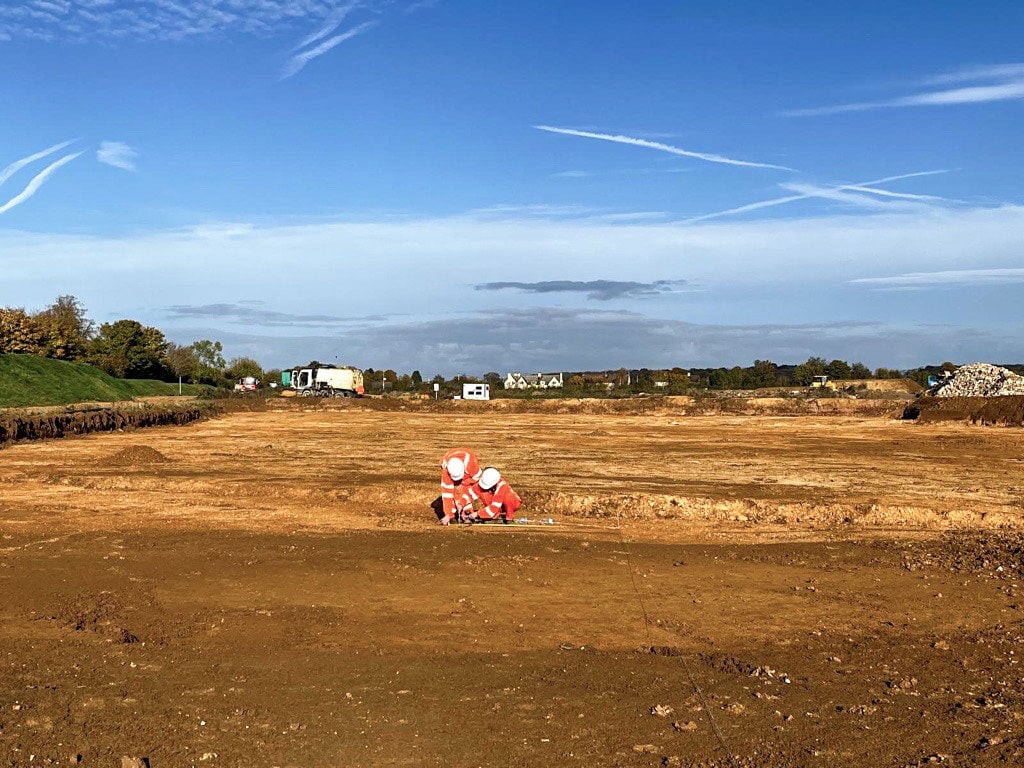
Continuing our works in the Aggregates sector, we completed a programme of Archaeological Excavation in advance of gravel extraction within a quarry in Cricklade, Wiltshire.
In Brief
Key Points
- Remains of a Romano-British trackway that extended in to an adjacent phase
- Extensive evidence for intensive episodes of recutting of the associated roadside ditches
- Pottery assemblage suggested that activity was carried out between the 2nd and 4th centuries AD
- Small molluscan death assemblage suggested the environment at this time was a dry, open and calcareous grassland
Summary
The quarry site lies close to the boundary between Wiltshire and Gloucestershire, approximately 2km to the northwest of Cricklade. Previous works within the quarry had revealed settlement, industrial and funerary evidence dating from the Early Bronze Age, Early to Middle Iron Age, and the Romano-British periods.
While a single sherd of prehistoric pottery was recovered from one of the features in this phase, the main activity at the site seemingly dated to the Romano-British period based on the recovery of heavily abraded sherds of pottery and ceramic building material fragments. Land drains and plough furrows were also evident, indicating a second phase of activity in the post-medieval period, while several geological features and areas of rooting were also investigated.
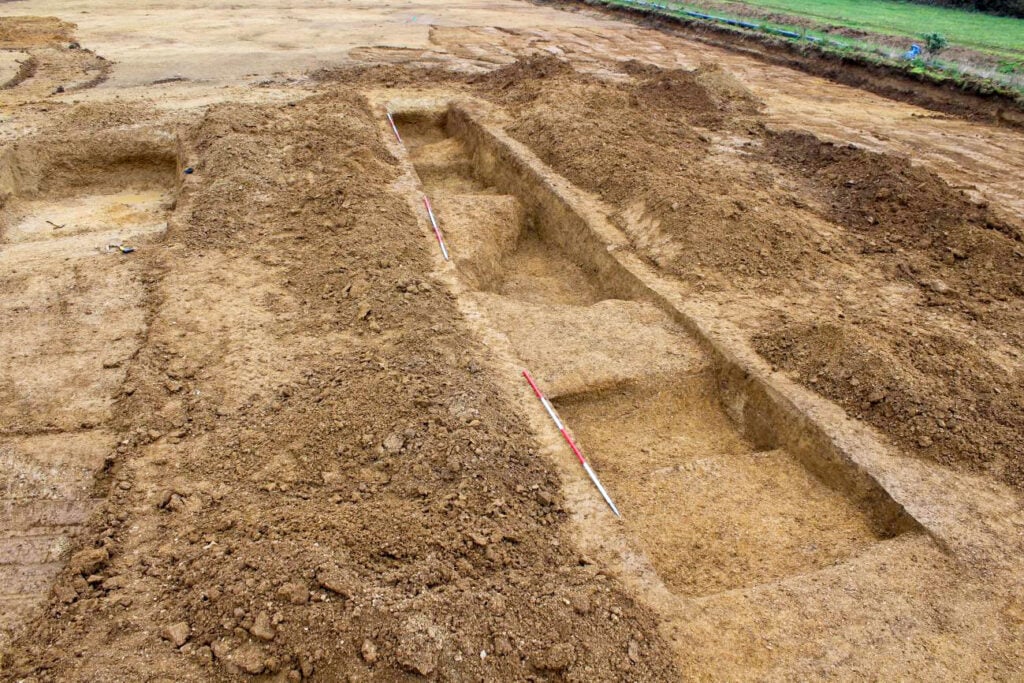
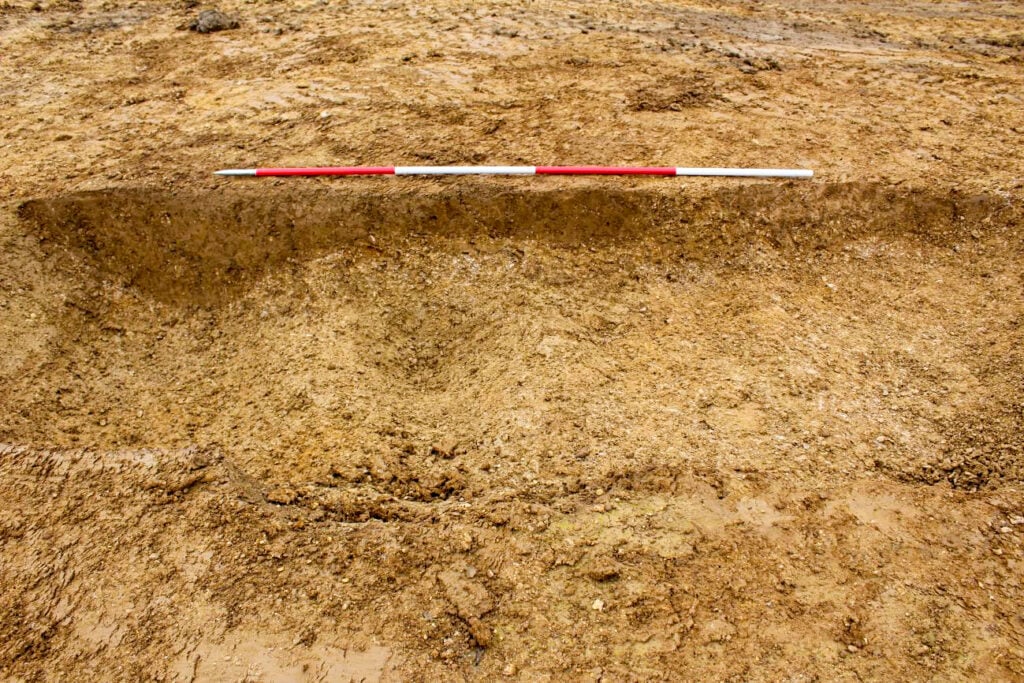
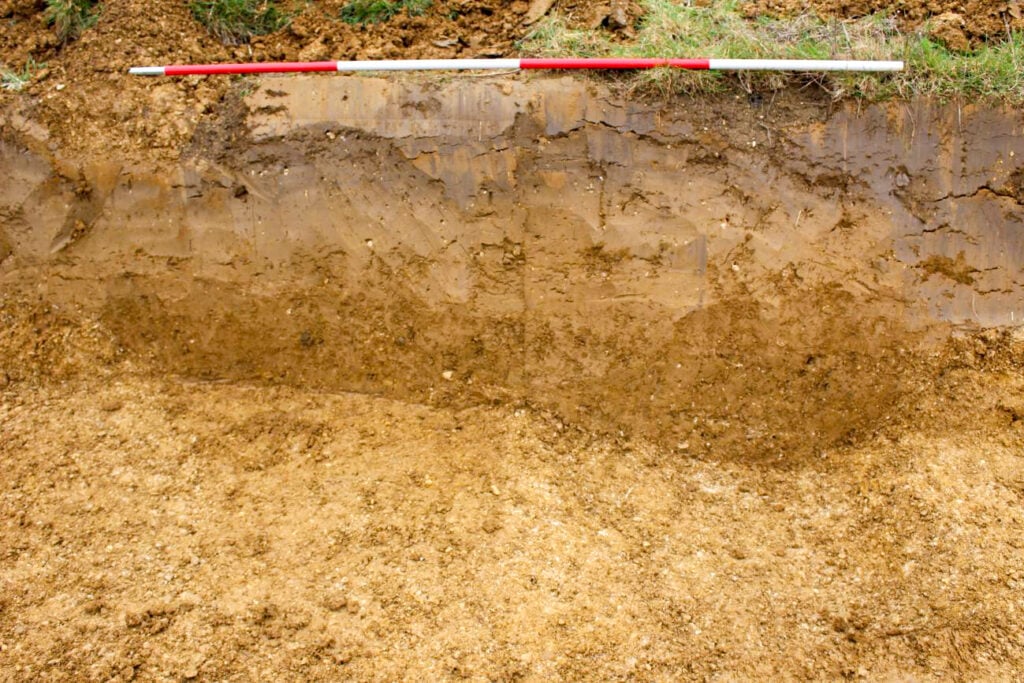
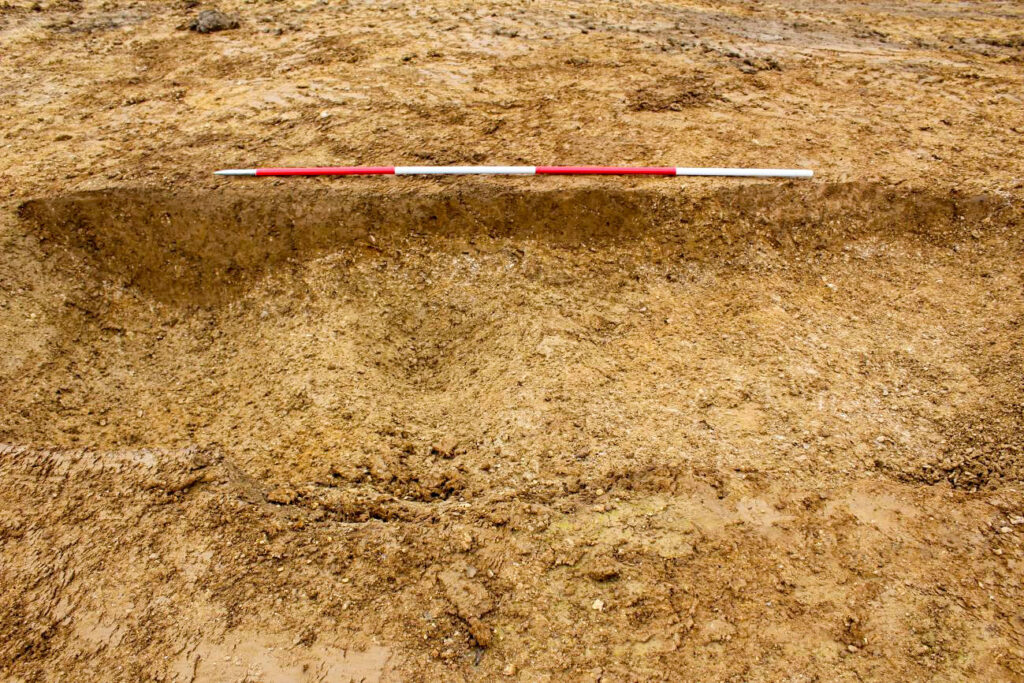
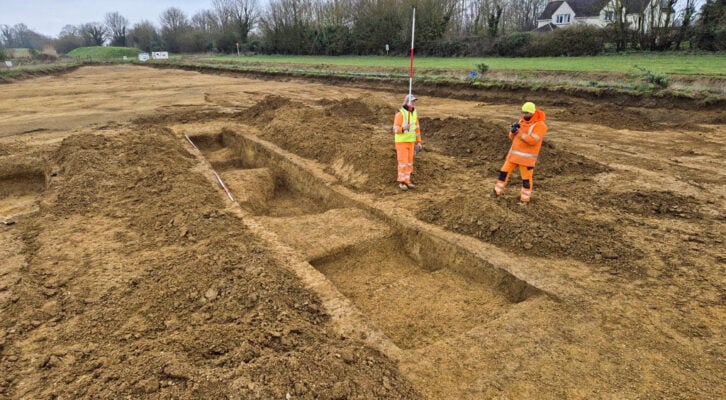
The main features identified in this phase include a trackway and parallel roadside ditches that showed evidence for numerous episodes of recutting and re-establishment. Based on the stratigraphic relationships this activity was further sub-divided in to five sub-phases, the earliest of which was a levelling event which represented the scalping of the ground to create a usable trackway surface. The final phase of activity related to the excavation of a pit and the deposition of a final consolidation layer.
Results
The excavation revealed the remains of a Romano-British trackway that was previously identified during works in a previous phase to the ENE. There was extensive evidence for intensive episodes of recutting of the associated roadside ditches, with a small assemblage of pottery suggesting that this activity was carried out between the 2nd to 4th centuries AD.
A small molluscan death assemblage also suggested that the environment at this time was a dry, open, and calcareous grassland, with poor abundances of charcoal indicating that residual burning was being carried out in the wider vicinity.
Although the results were largely limited, the works carried out within this phase may help in addressing specific research aims as identified in The Archaeology of South West England: South West Archaeological Research Framework.