

Archaeological Observation, Wells to Glastonbury
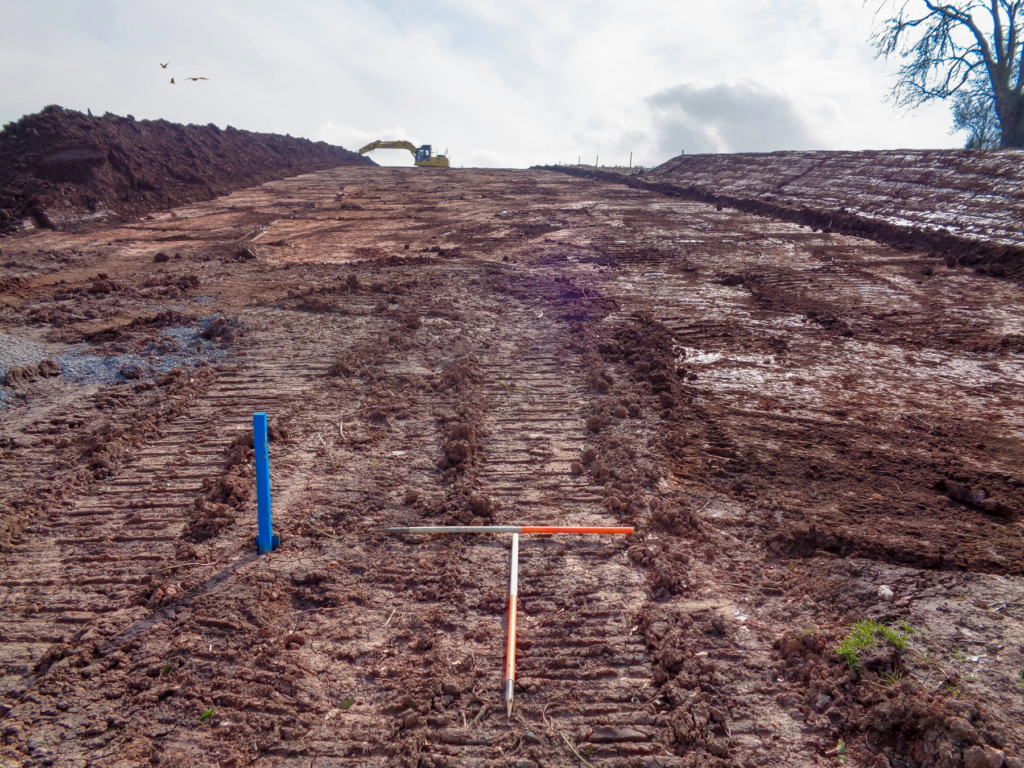
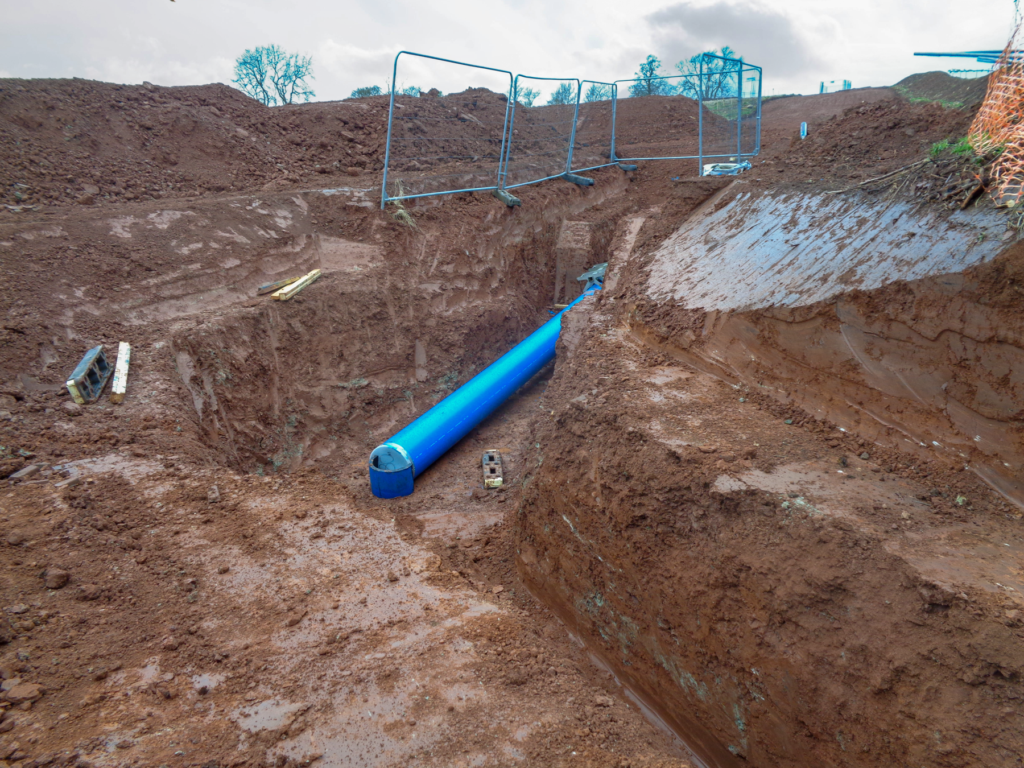
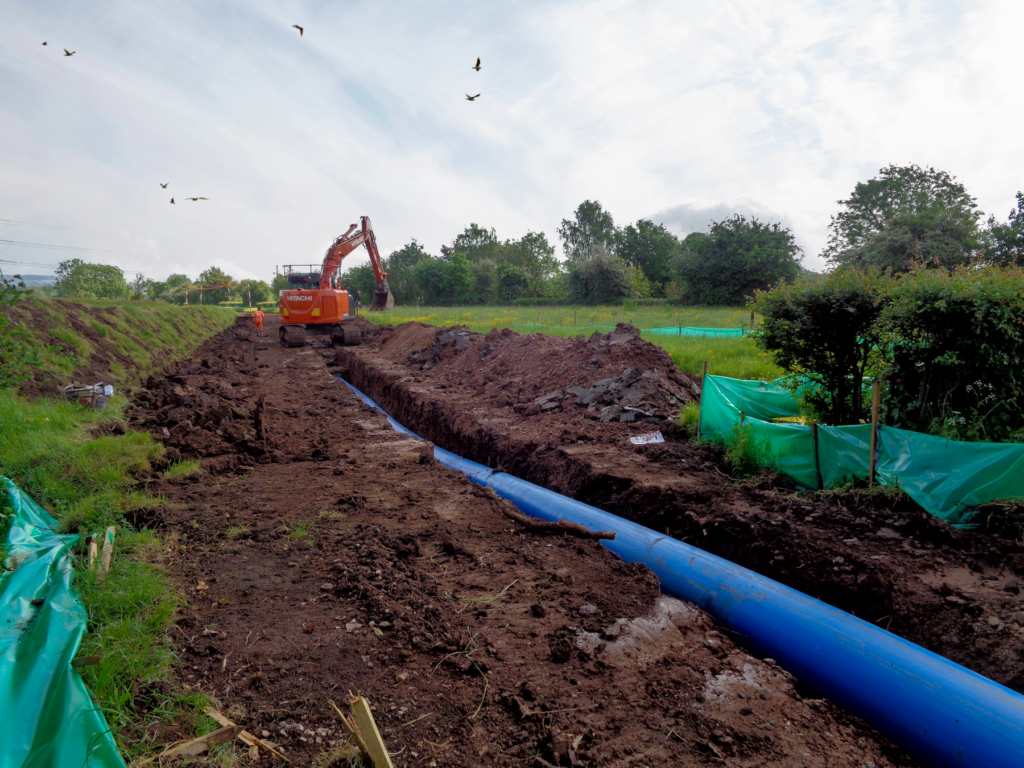
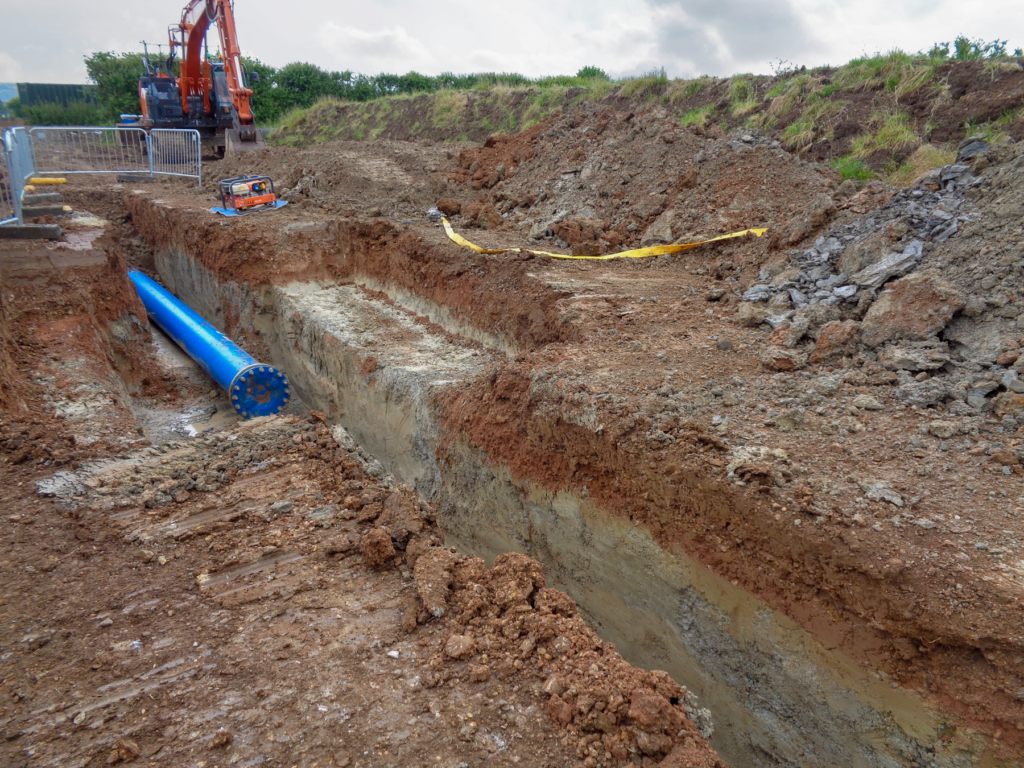
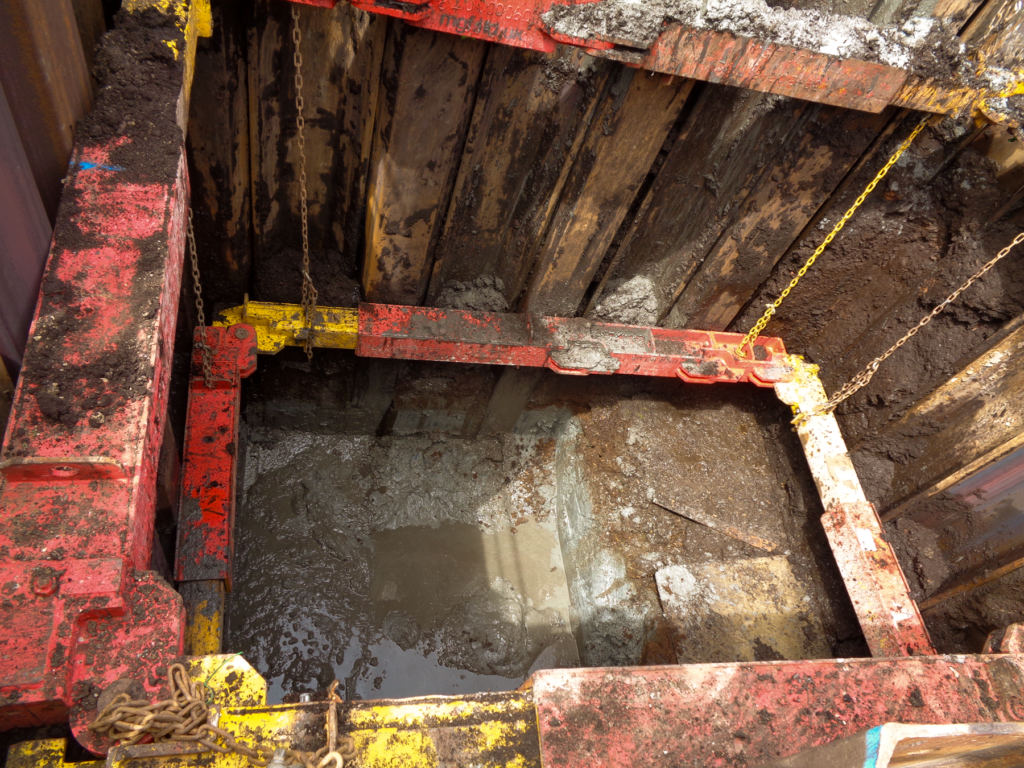
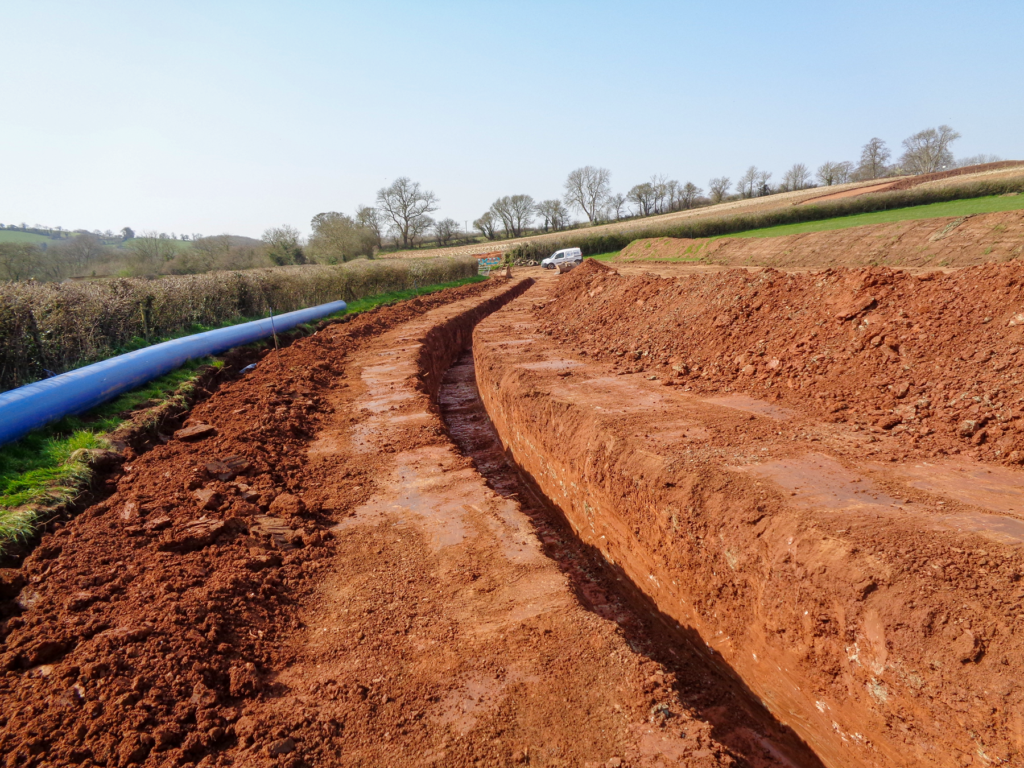
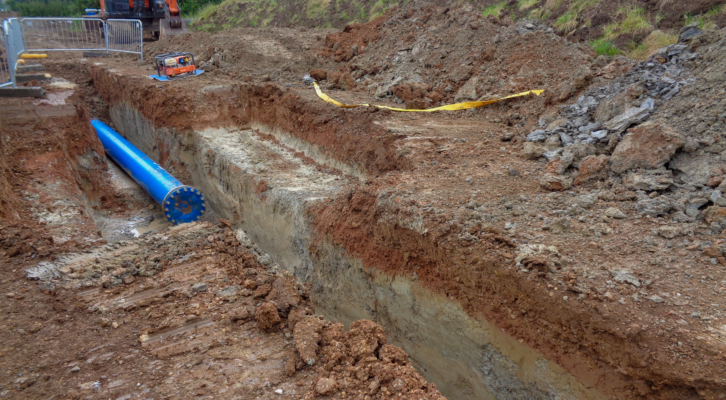
Archaeological Observation was carried out across approximately 8km of open farmland for the Wells to Glastonbury pipeline. The groundworks comprised the excavation of drill pits, four on the Somerset Levels, and pipeline installation.
In Brief
Key Points
- Programme of Archaeological Observation
- Worked flint confirmed prehistoric activity noted in previous works
- Iron Copper alloy production
- Drill pits within the Somerset levels
Summary
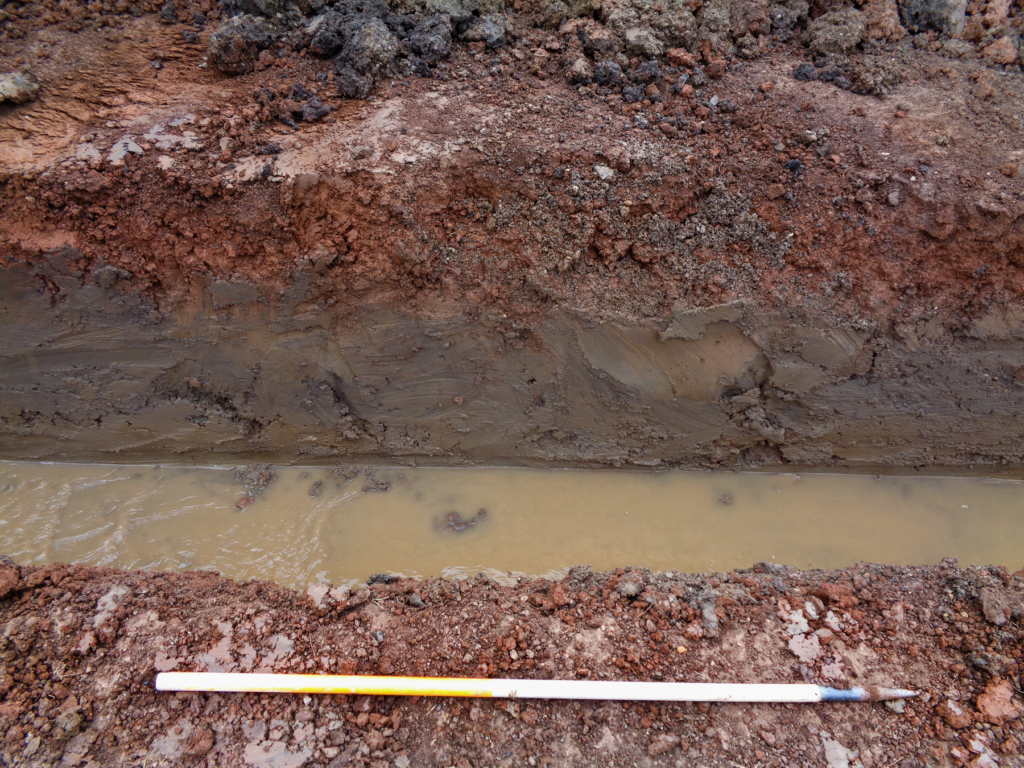
The excavations revealed evidence of human occupation dating from the prehistoric. The area remained focused on agriculture with smaller areas of industry, as evidenced by the ditch connected to Henley Mill.
Results
A small assemblage of worked flint was recovered just north of the river Sheppey, confirming prehistoric activity in the area. The majority of the pottery recovered dated to the 17th to 18th century and those of note were mostly collected from evidence-based areas. The LiDAR data pertained to areas of medieval and post-medieval agriculture, which were not affected by the excavation as the methodology often changed as the scheme progressed.
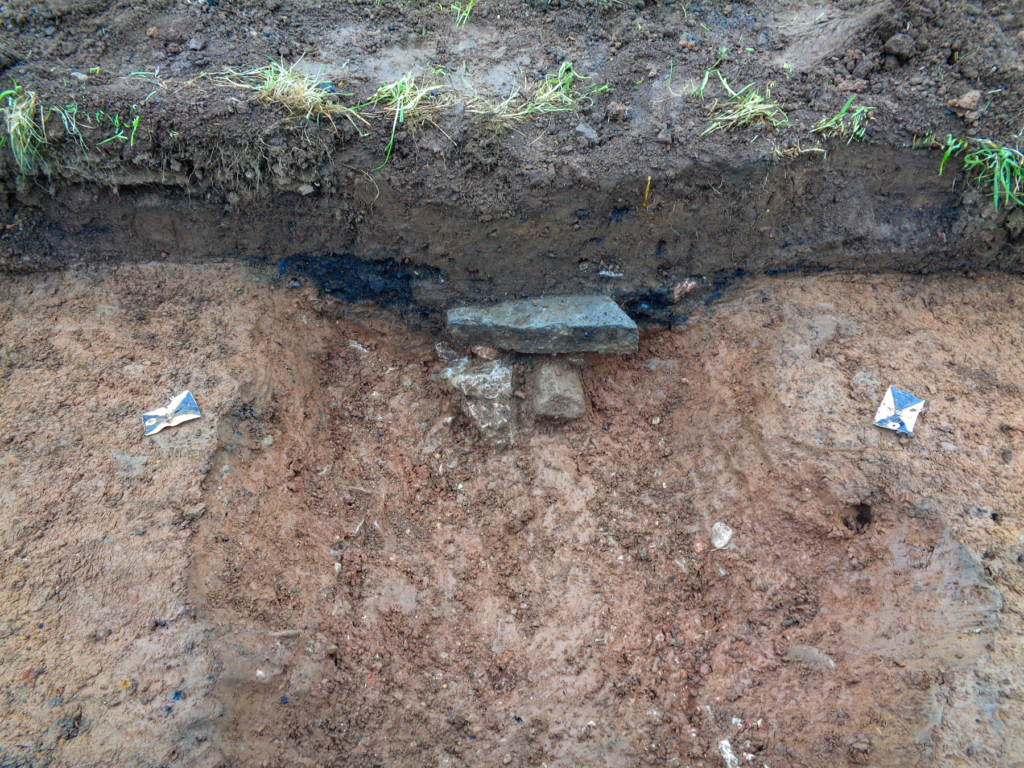
Palaeoenvironmental samples taken from a small gully confirmed iron and copper alloy working, possibly associated with Henley Mill, which has been a working mill of various products since the 14th century. The pottery and CBM recovered from the upper context dated the fill to the 18th century.