

Archaeological Evaluation & Excavation, Ross-on-Wye
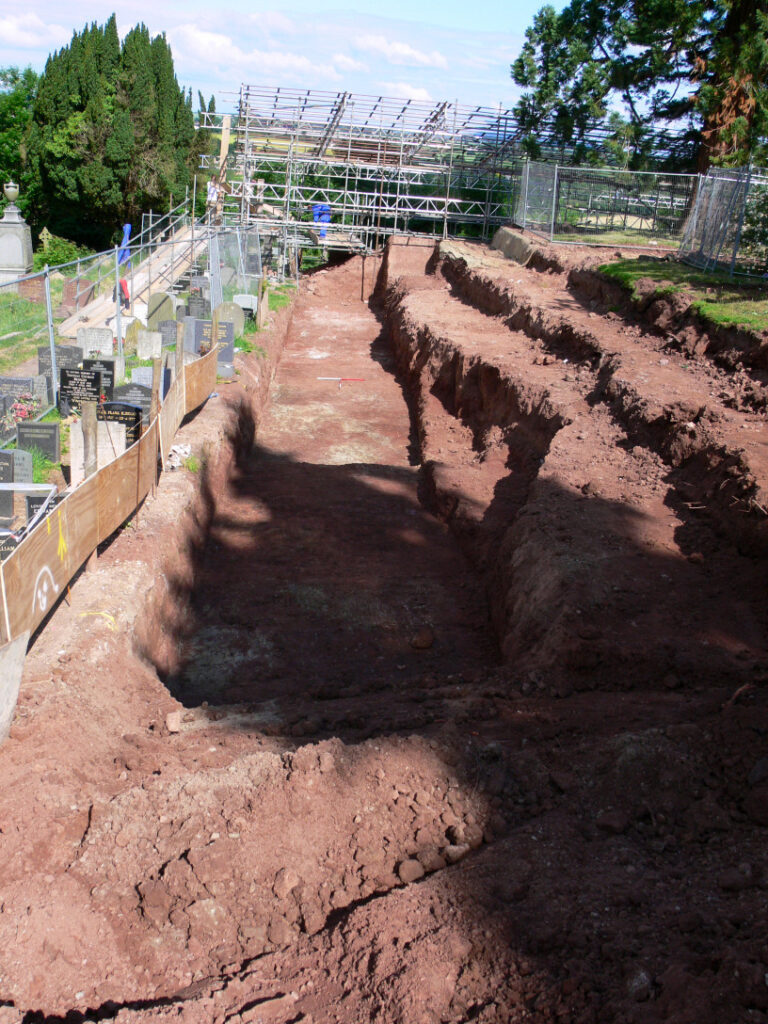
The collapse of a late 17th century boundary wall surrounding the Prospect Gardens, a long-established amenity area overlooking the River Wye adjacent to St Mary’s Church, initiated a major programme of archaeological work which on behalf of Herefordshire Council
In Brief
Key Points
- From the Archives
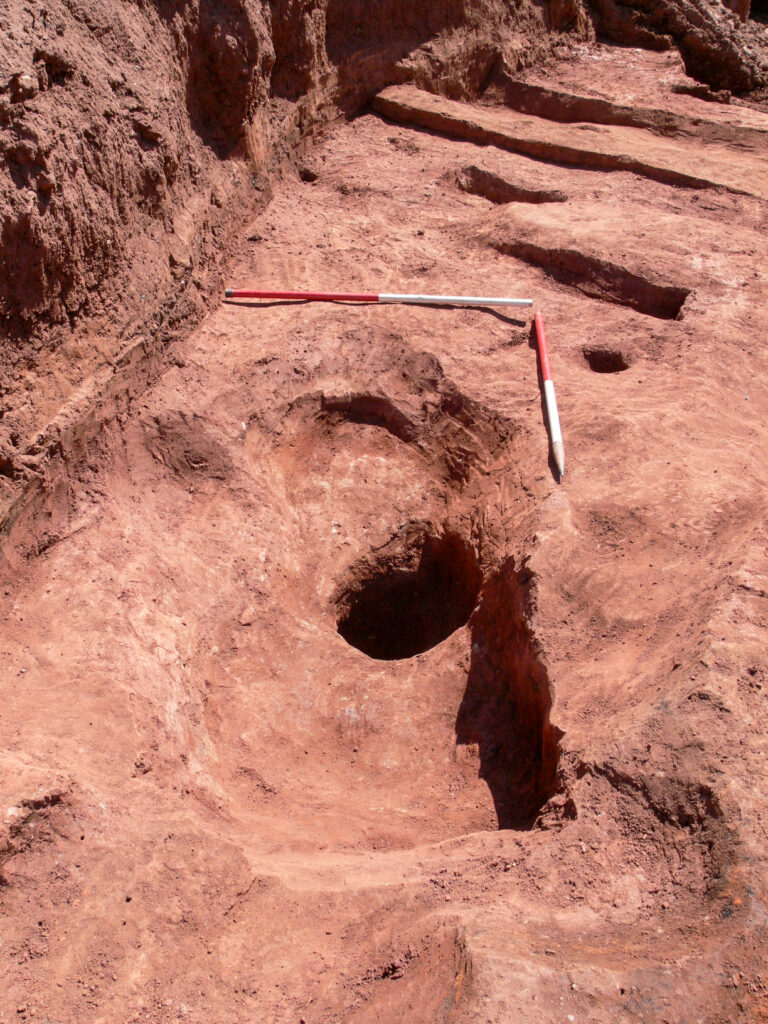
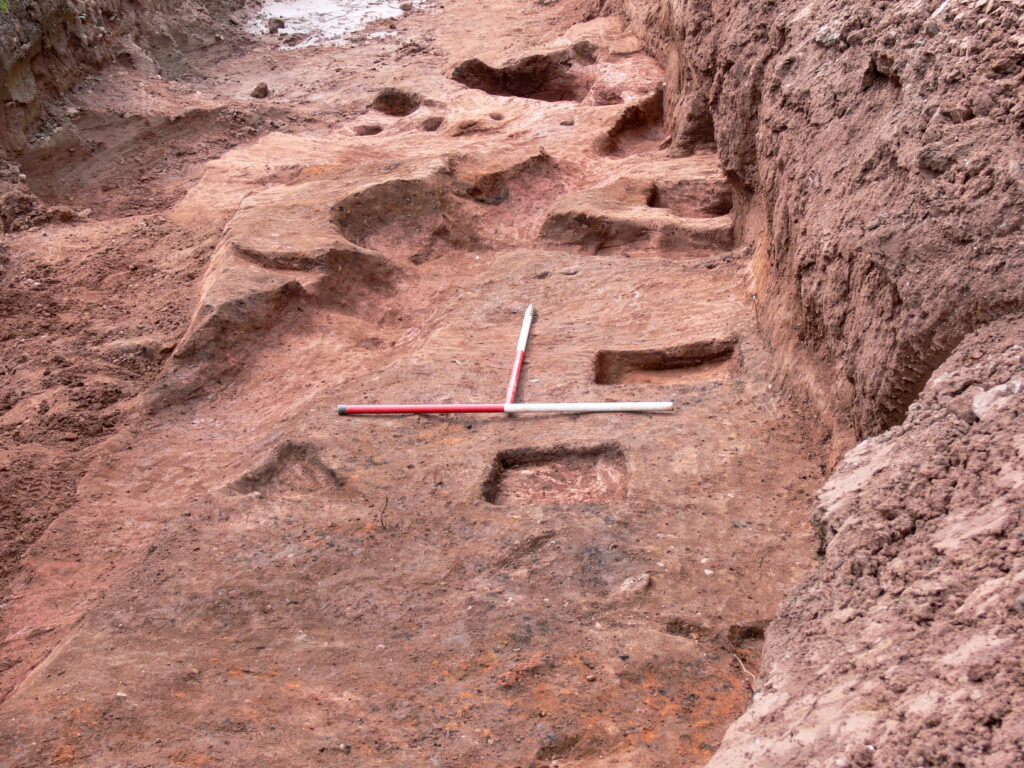
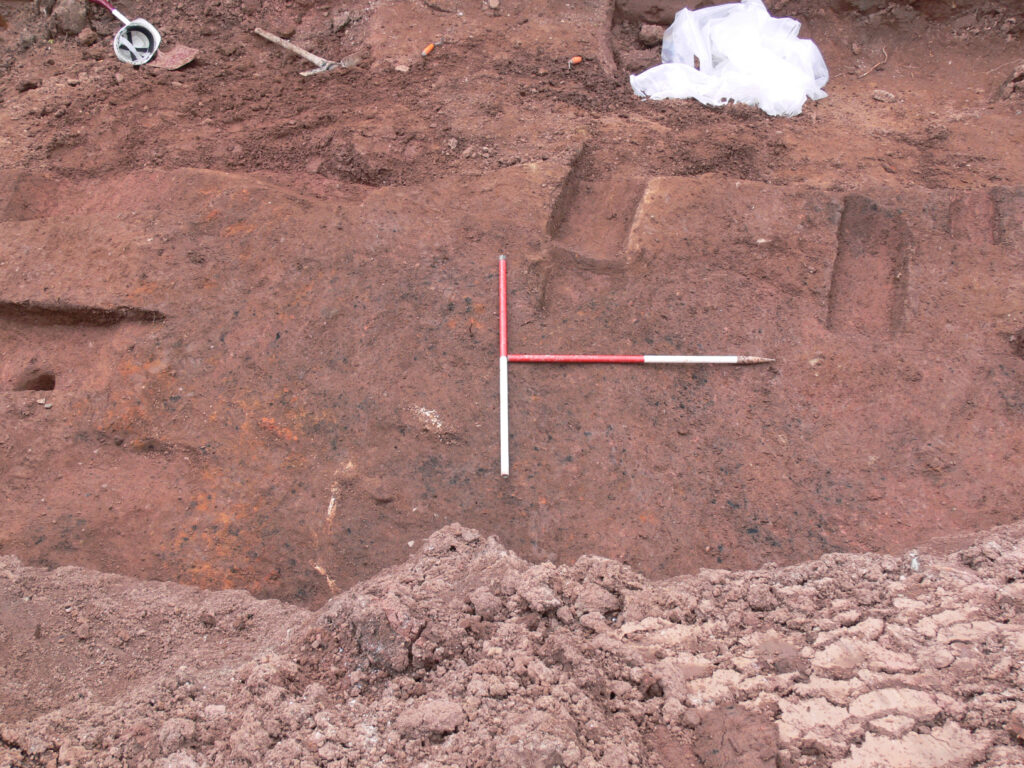
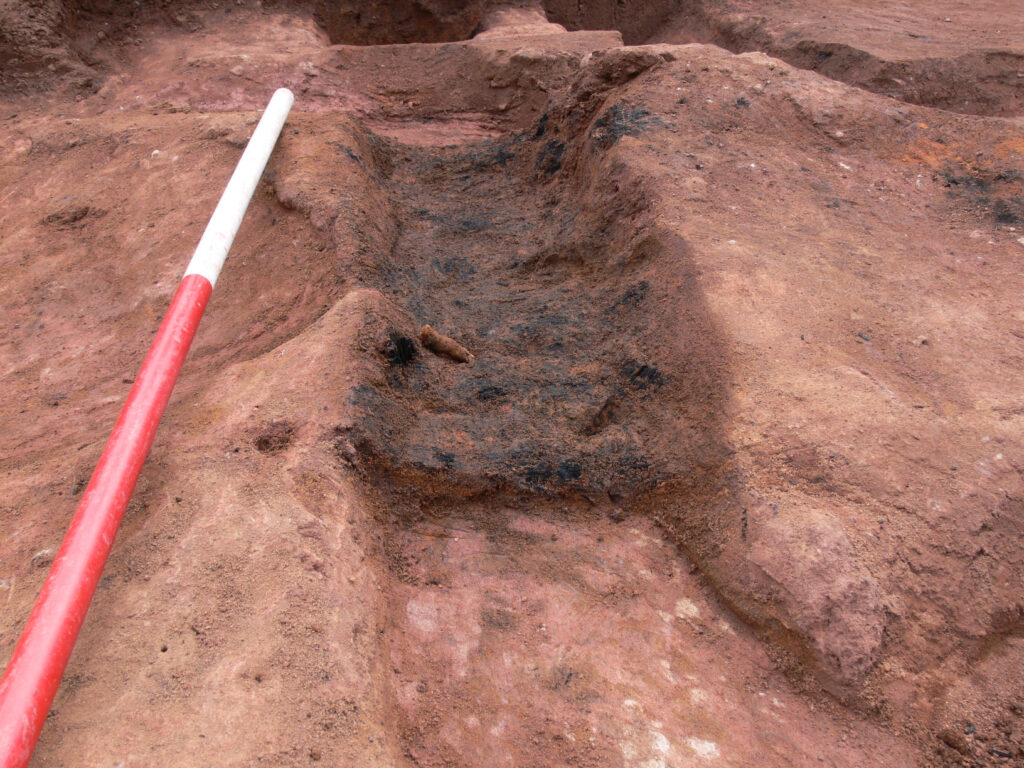
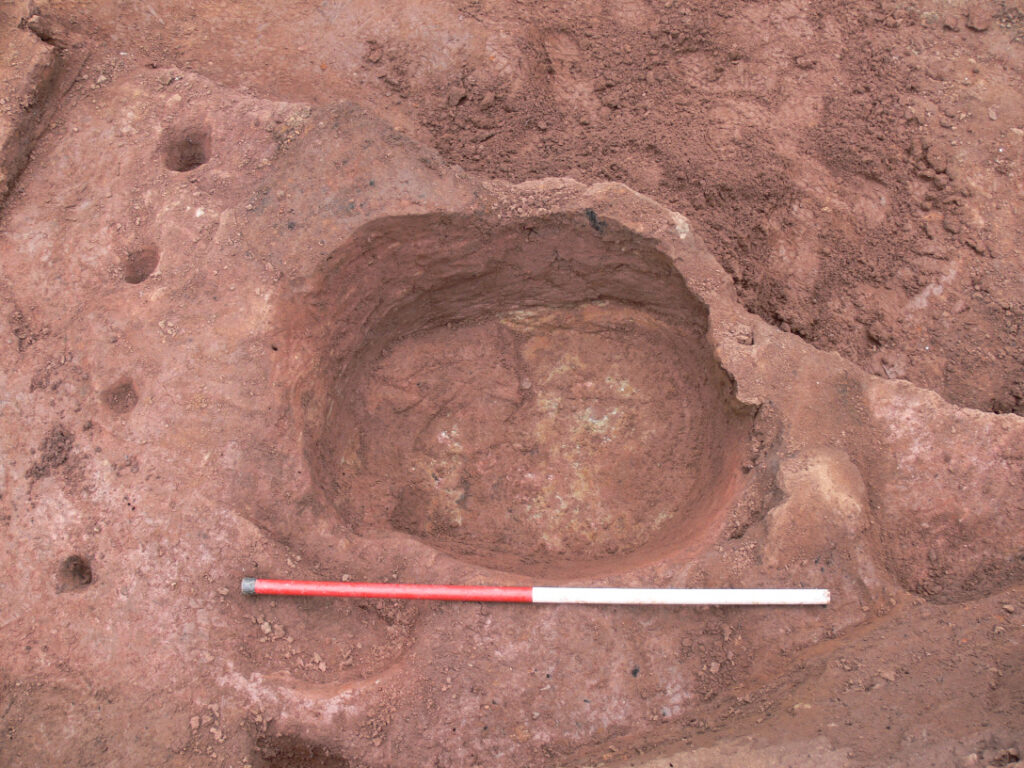
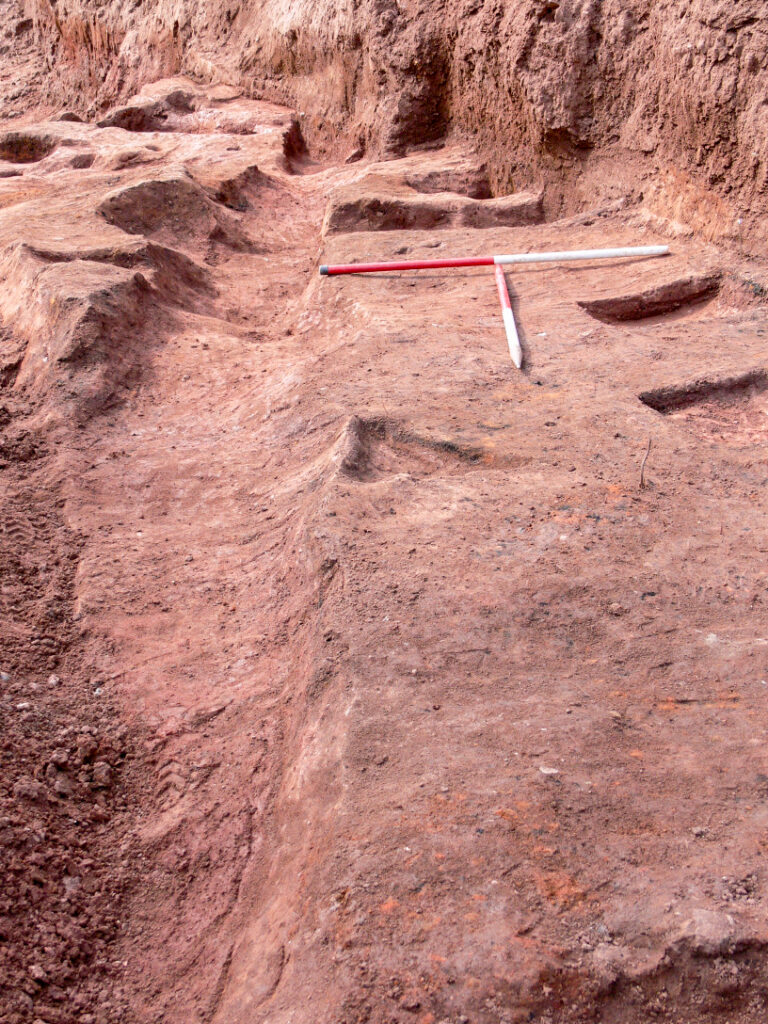
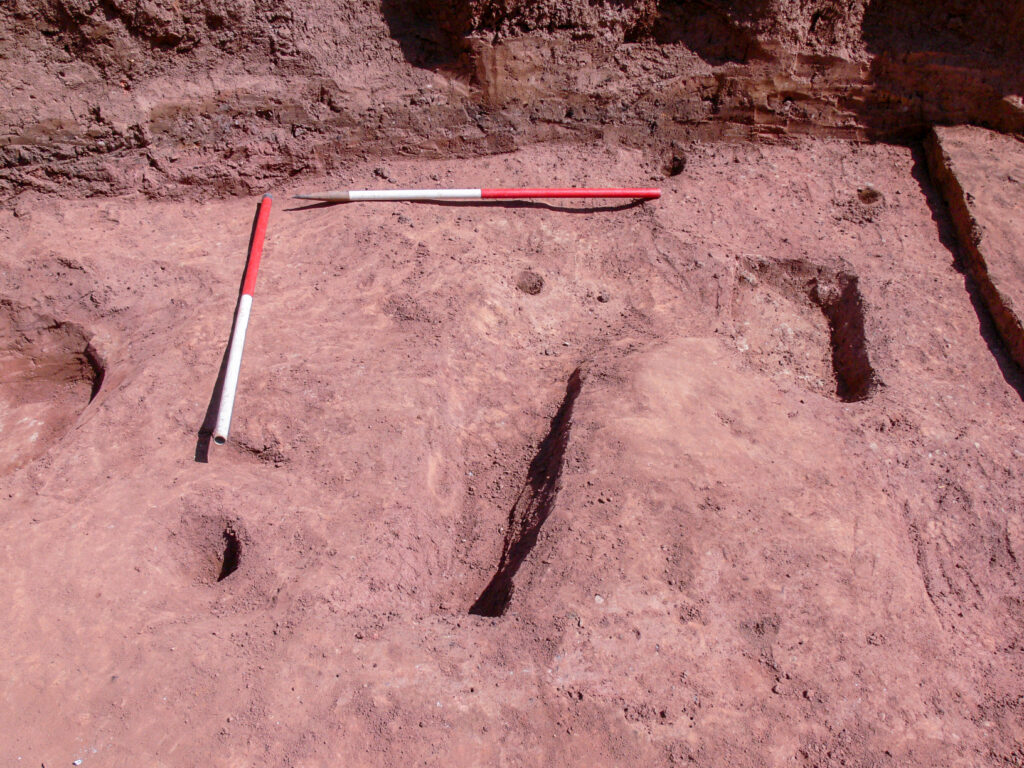
- Dense concentration of deposits and features indicative of early Roman settlement and ritual activity
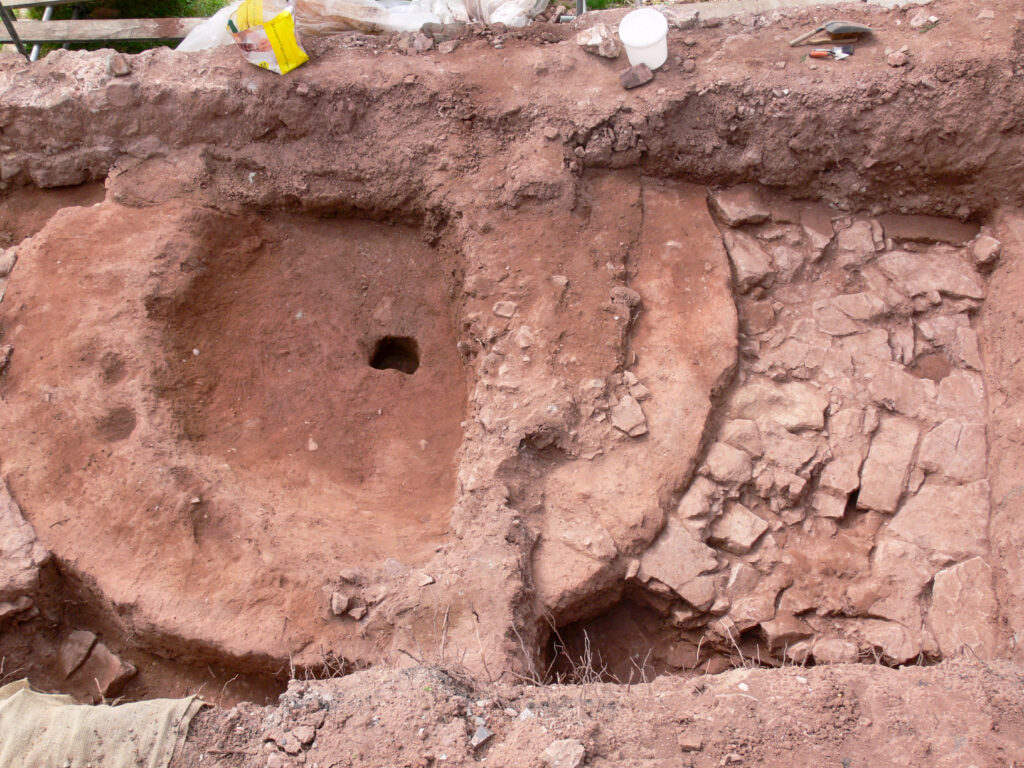
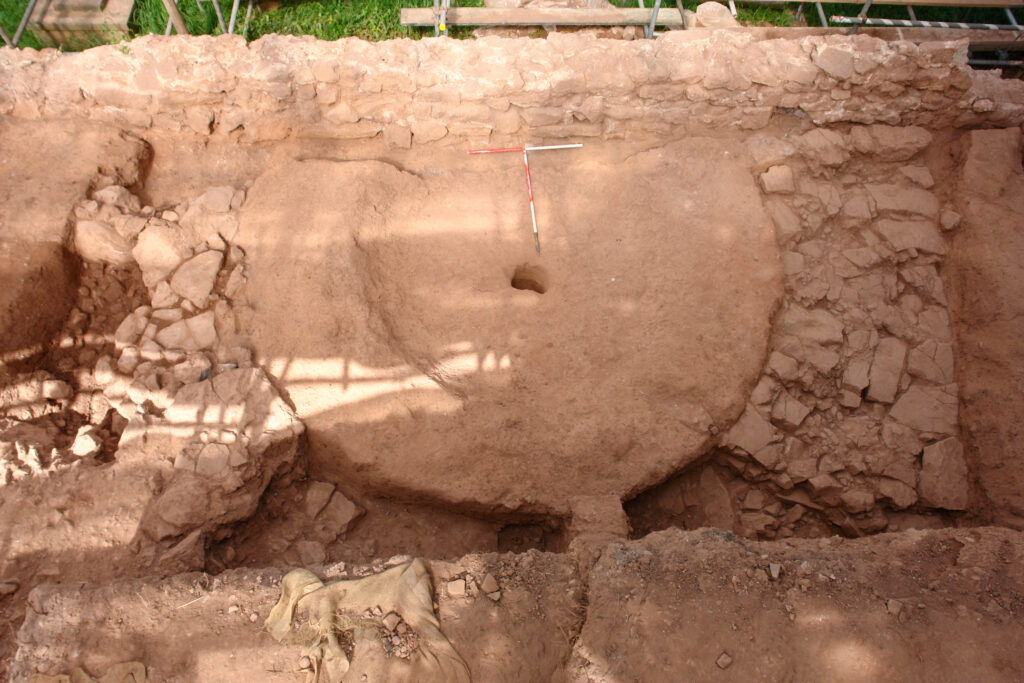
- Discovery of a substantial masonry foundation of very unusual plan
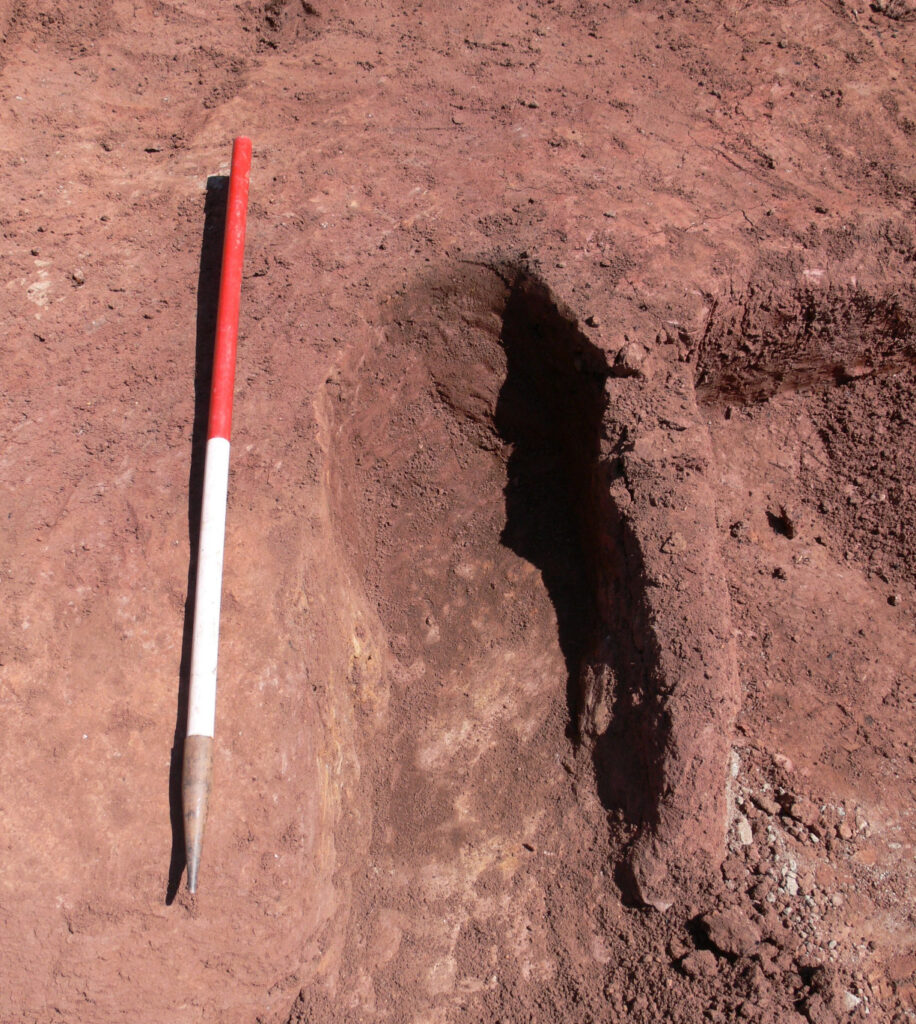
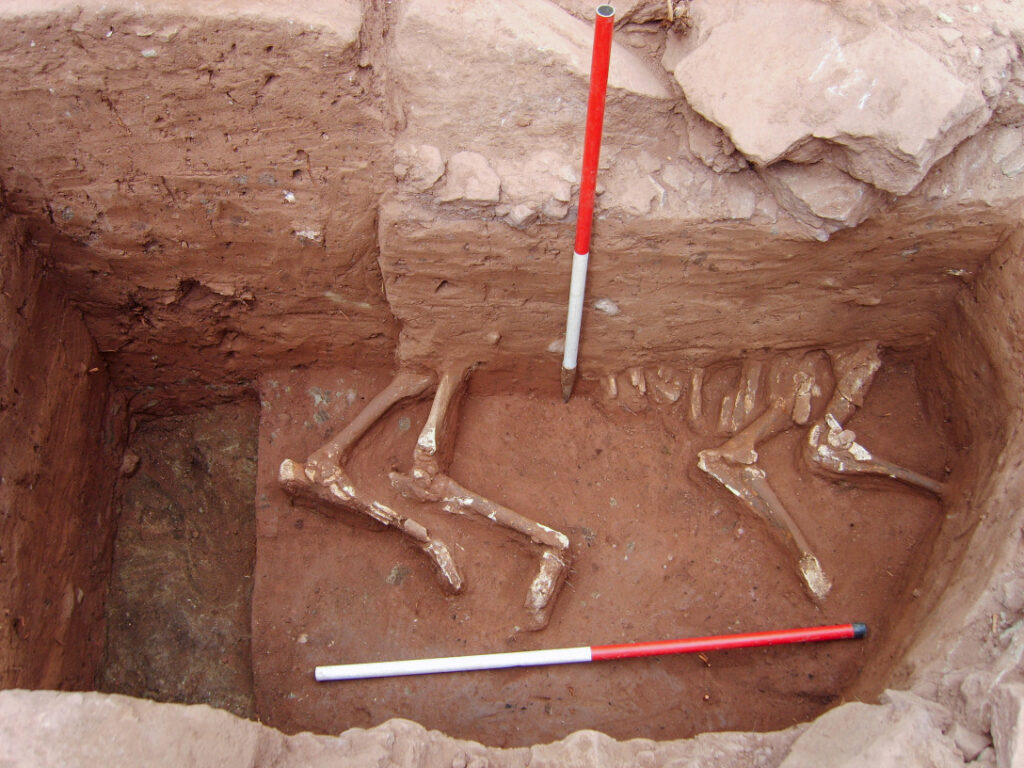
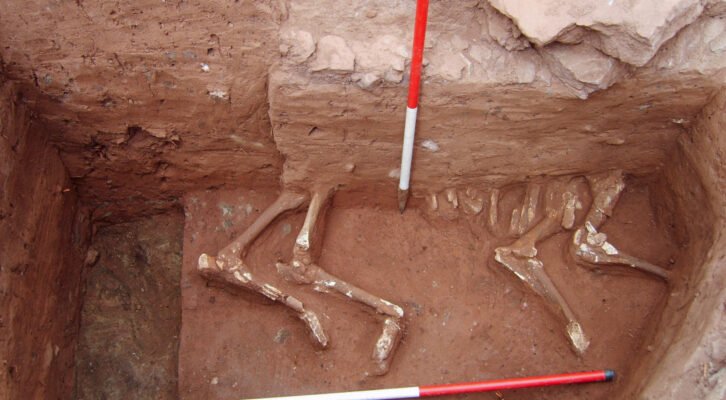
- Several presumably ritual horse burials were exposed, together with remains of metal horse fittings
- Large quantity of pottery was recovered, including specialised vessels such as a ‘honey pot’, appearing to be particularly indicative of military occupation
Summary
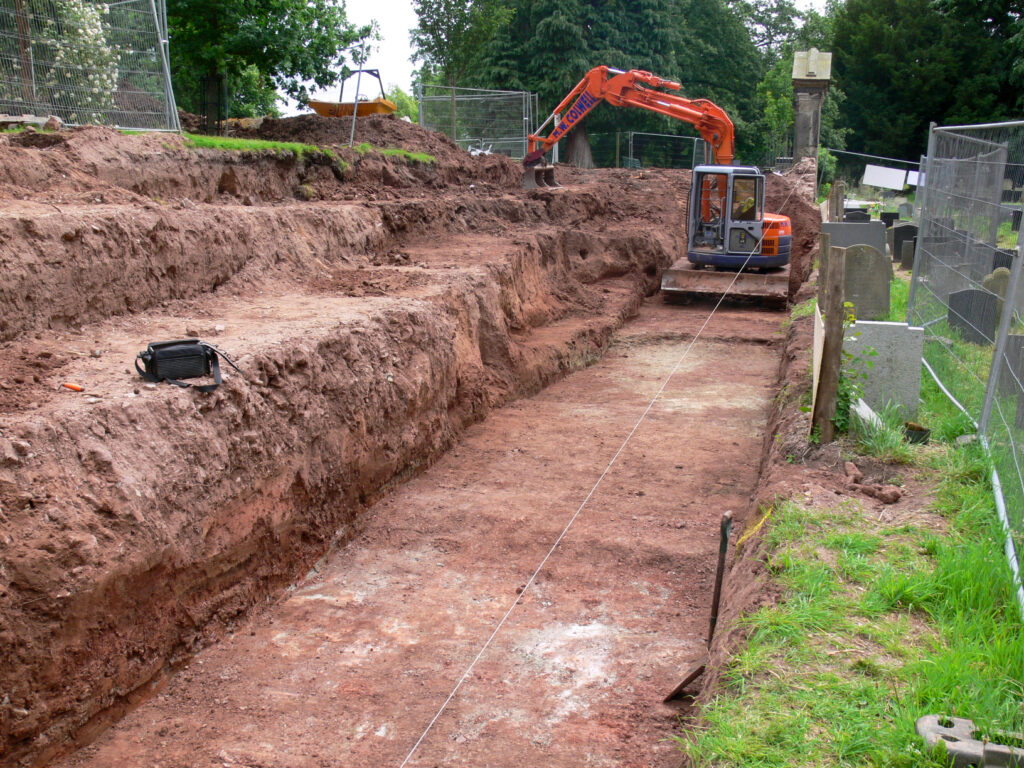
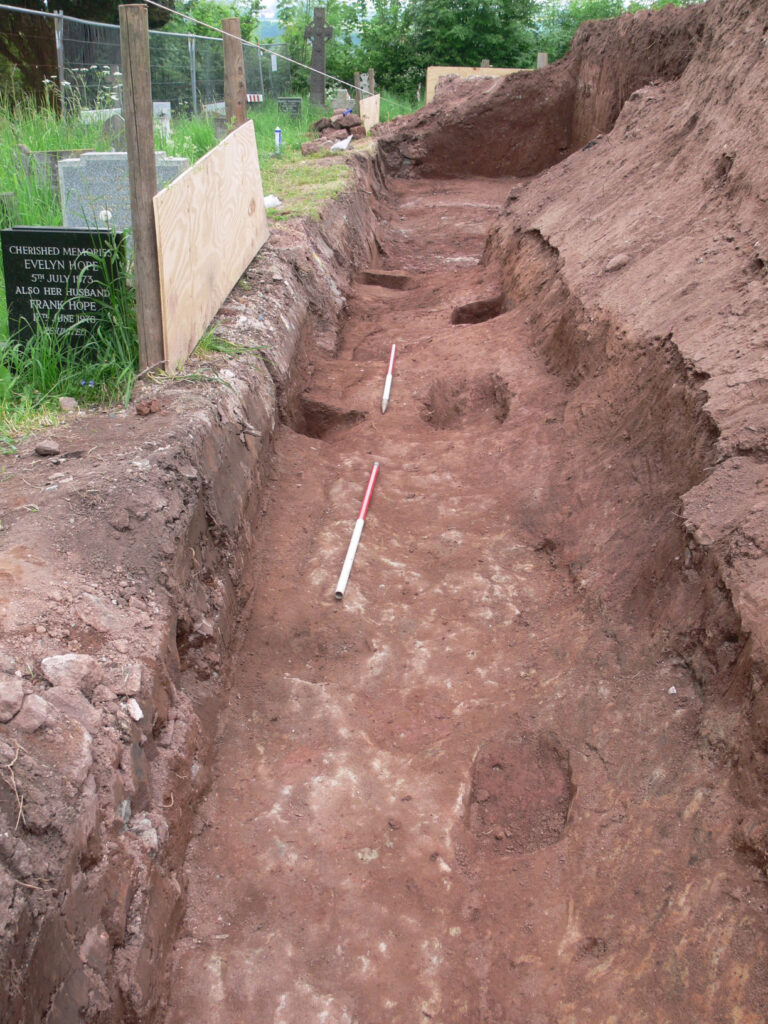
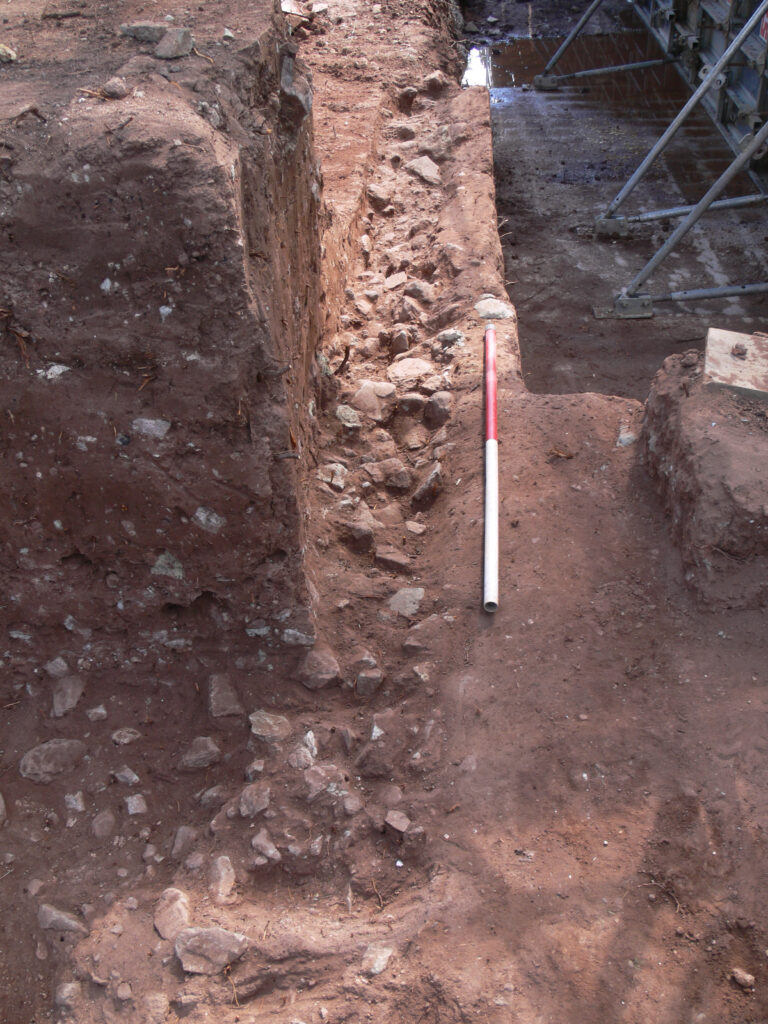
The investigations were carried out as an integral component of the Council’s repair and replacement programme and initially took the form of a limited intervention archaeological watching brief along the northern and western walls of the gardens, the depths of these excavations related directly to the height of the Prospect wall and were 2.5m in width. The excavations began around 10m to the north of the western gate of the Prospect.
In view of the site’s proximity to the churchyard, it was anticipated that human burials would almost certainly be encountered during the course of the groundworks, while there was additionally a possibility of locating long-buried remains relating to the palace of the Bishops of Hereford, known to lie in the general vicinity but presumed to be further to the northeast beneath the present Royal Hotel.
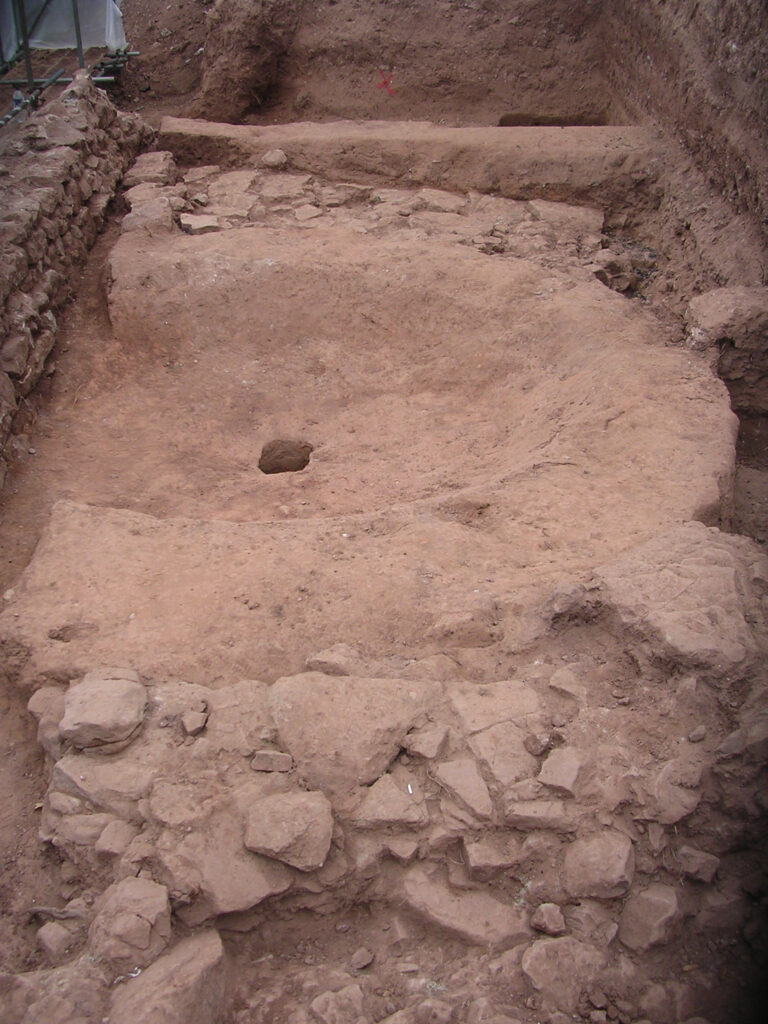
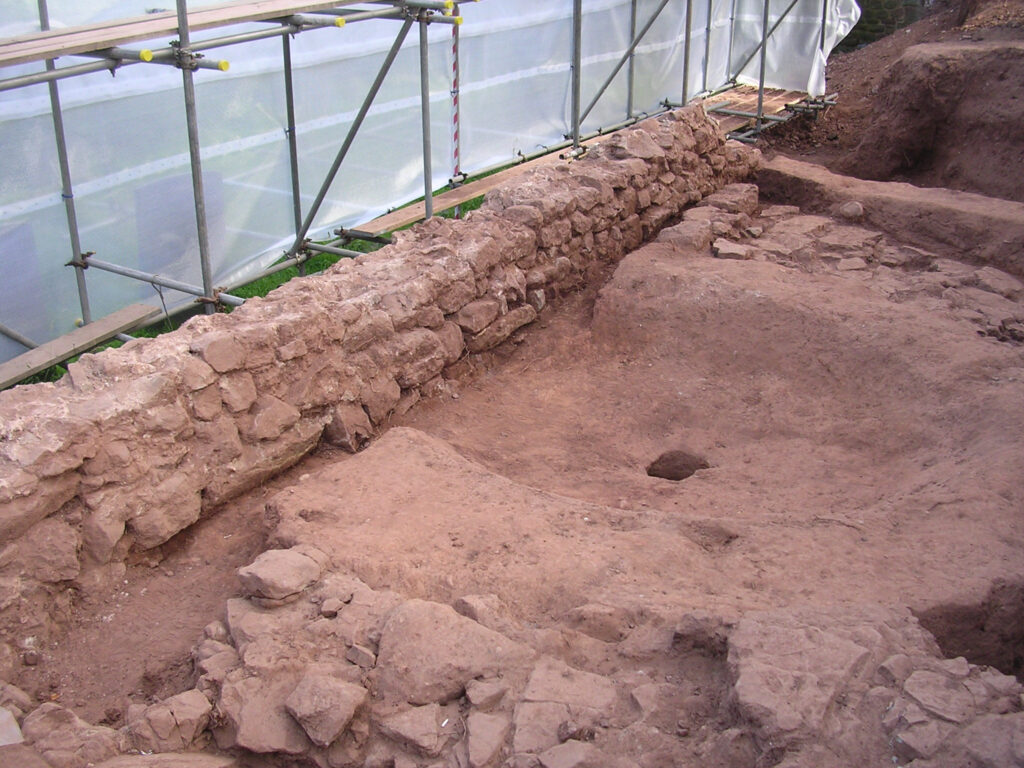
Surprisingly, no human burials were discovered but expectations were doubly confounded with the discovery of some extremely exciting masonry remains, evidently of very early date, which the Council’s archaeological officers immediately acknowledged to be of some considerable importance and which very quickly became the focal point of further investigations, as well as a source of much scholarly debate and local interest.
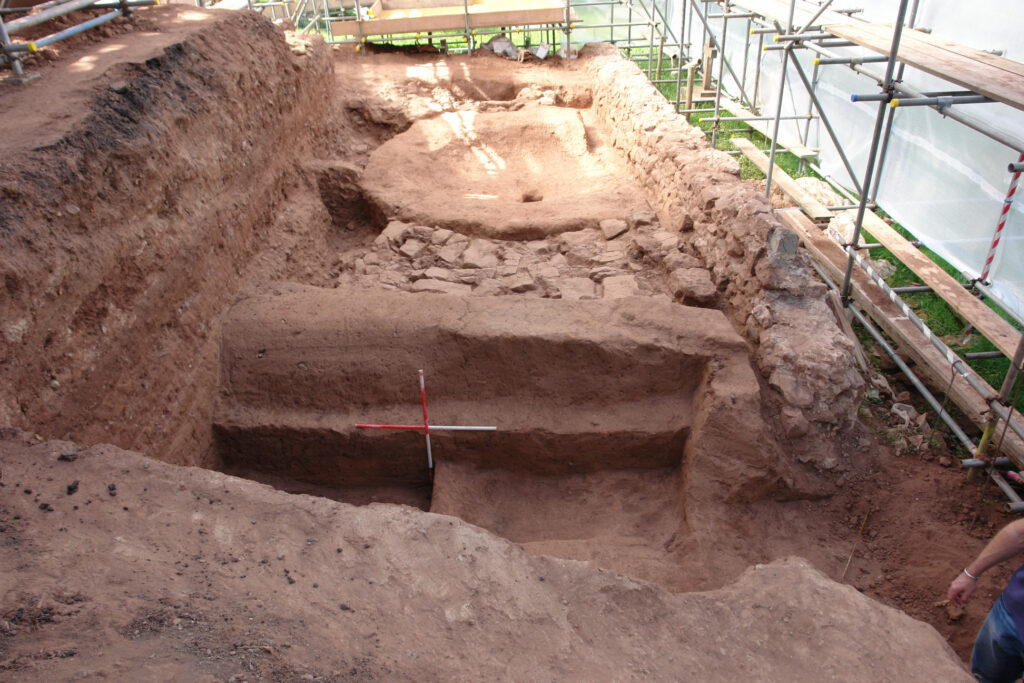
Consequently, a programme of full excavation of the northwest corner of the Prospect was agreed in conjunction with Border Archaeology with a further investigation to be carried out just to the north of the centre of the Prospect.
Results
This programme of archaeological work revealed an extremely significant and hitherto unsuspected body of evidence relating to Roman settlement and later medieval occupation within the Prospect Gardens.
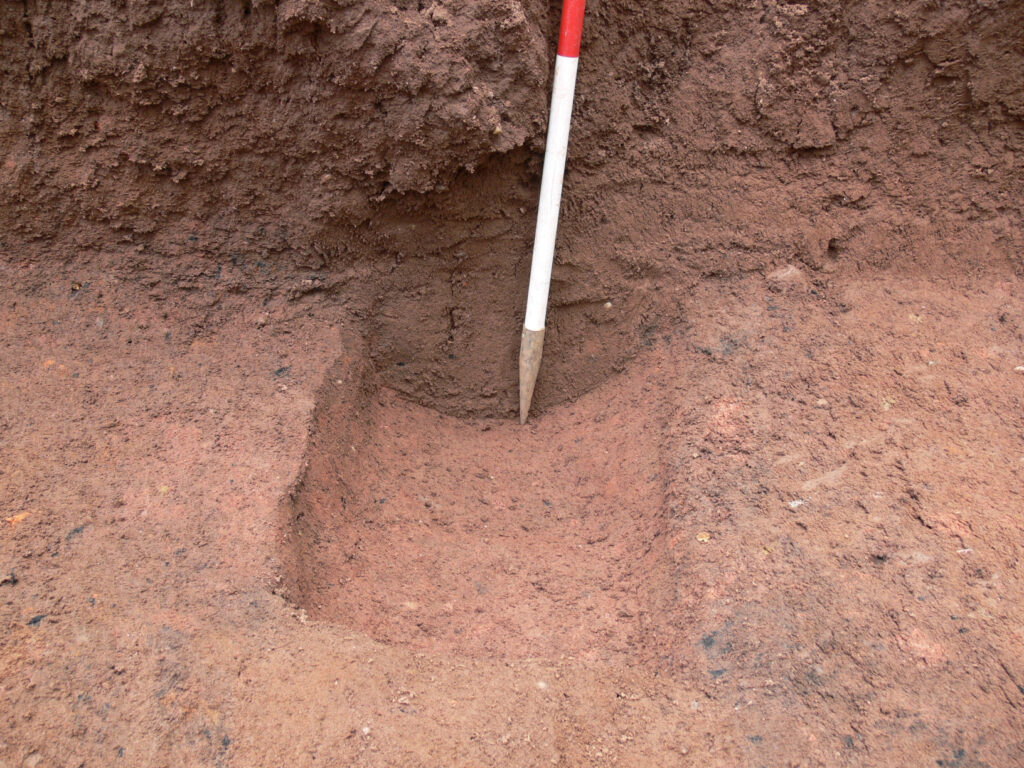
Evidence for pre-Roman occupation on the site was sparse, consisting of a small group of pits, a linear ditch and a single posthole, the fills of which were largely devoid of ceramics and other material finds with the exception of a single fragment of probable Roman CBM. A small assemblage of worked flint was also recovered from the site, although the flints were either unstratified or contained within later Roman deposits or features.
The majority of the features identified during the excavation appear to relate to an intensive period of Roman occupation on the site, extending at its broadest range from the mid-late 1st century AD through to the early-mid 2nd century AD. The nature and chronology of the pottery assemblage, in particular the preponderance of Gloucester mortaria, imported flagons, mortaria and amphorae and other specialised vessels, points towards the existence of a probable military settlement on the site, possibly a vicus associated with a nearby fort, which appears to have spanned the late 1st-early 2nd century with a pronounced decline in occupation during the Hadrianic-Antonine period.
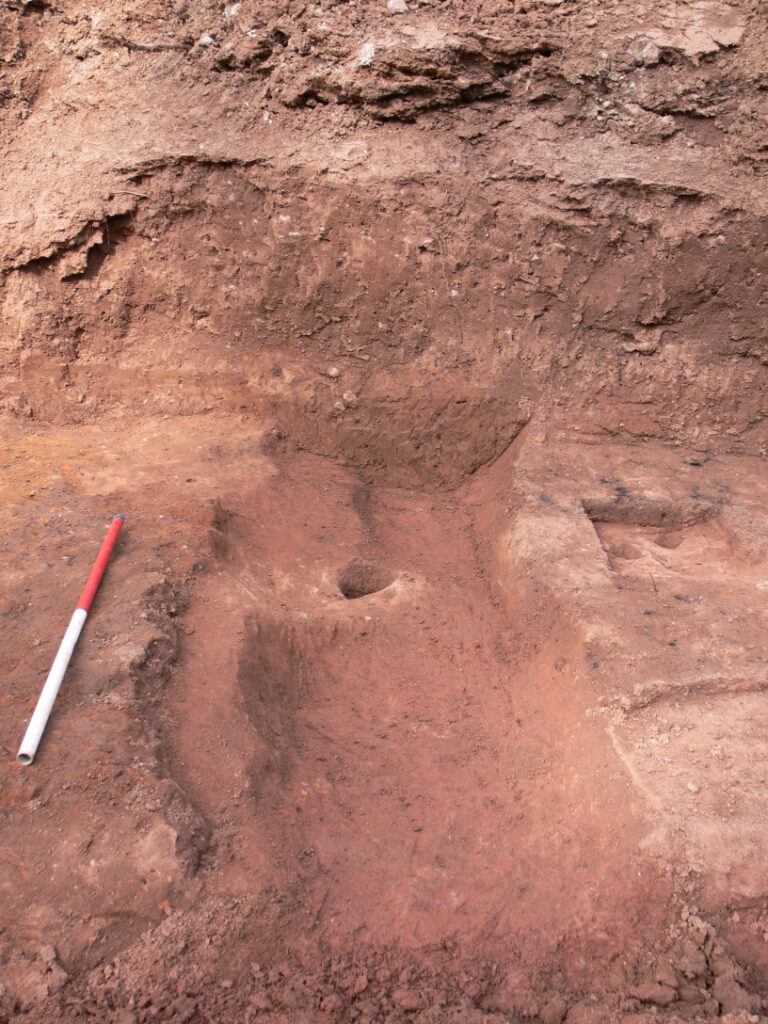
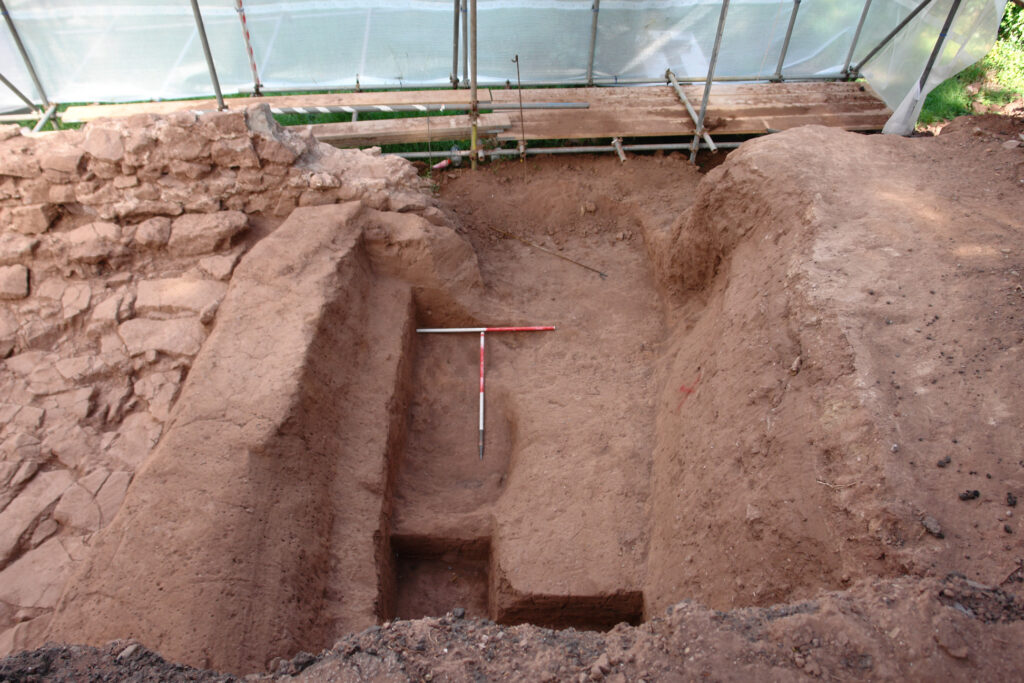
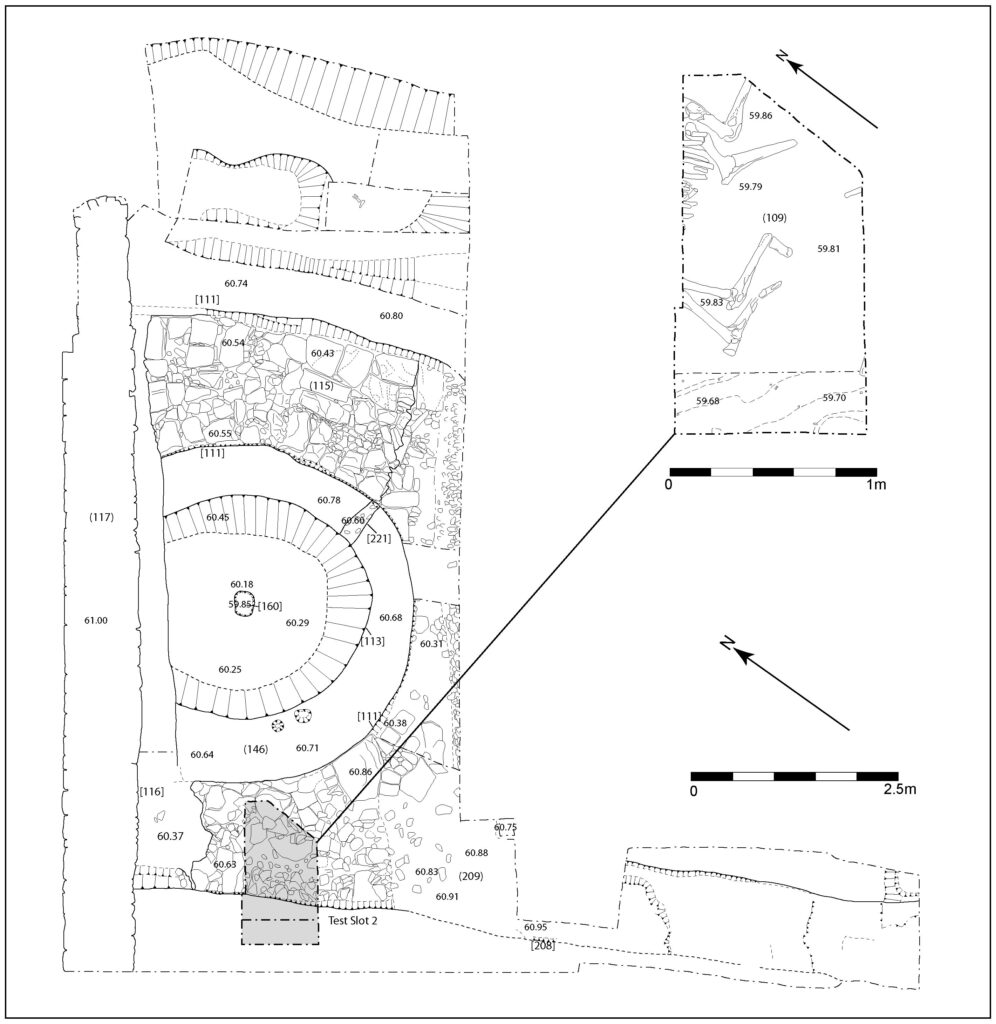
Following a period of prolonged abandonment or reduced occupation, another phase of activity appears to have occurred, represented by the construction of a masonry structure, which appeared to have been cut from landscaping deposit. It was difficult to establish a precise date for the masonry structure, although a single sherd of mortarium ware of unspecified Roman date was recovered from the primary fill of the construction cut. The structure as revealed exhibited a number of extremely unusual, if not singular features, comprising what appears to be a square structure with a circular inner chamber, with a central feature, presumably a posthole in the centre of the chamber.
The specific plan of the building is extremely unusual and it is difficult to find parallels with buildings commonly found on other Romano-British sites either in England or Wales. Based on the unusual plan of the building and its location on an elevated site overlooking the river, it could well have been a temple, possibly originating as a native shrine in the late Iron Age (suggested by the circular plan of the inner chamber) and subsequently rebuilt in stone at some point during the Roman period.
If this is indeed the case, then it represents only the second Roman temple site to have been excavated in Herefordshire, the first being at New Weir, Kenchester. An alternative explanation is that the structure forms part of a larger grouping of buildings, possibly a late Roman farmstead/villa complex established on the site.