

Archaeological Observation & Excavation, Swindon
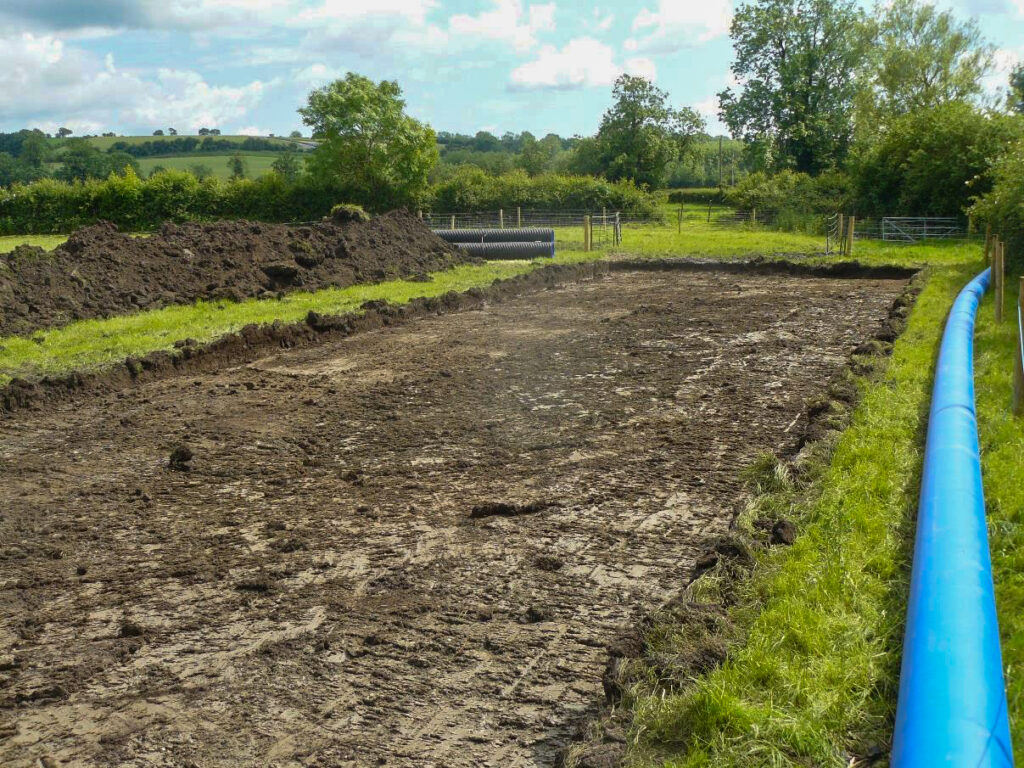
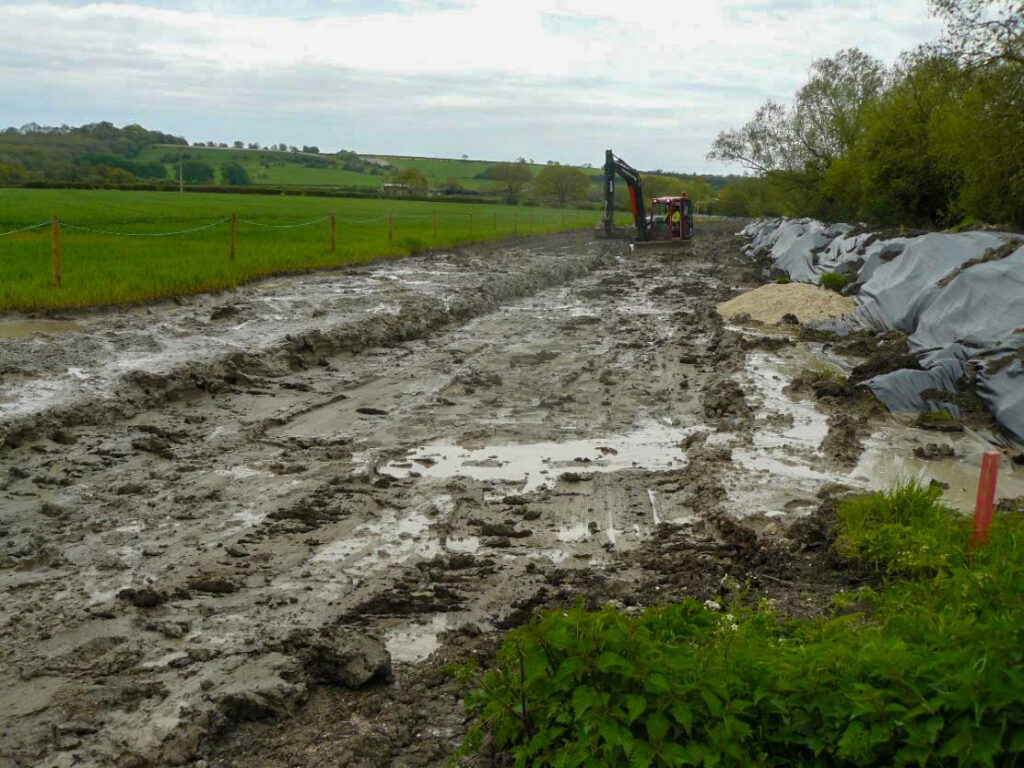
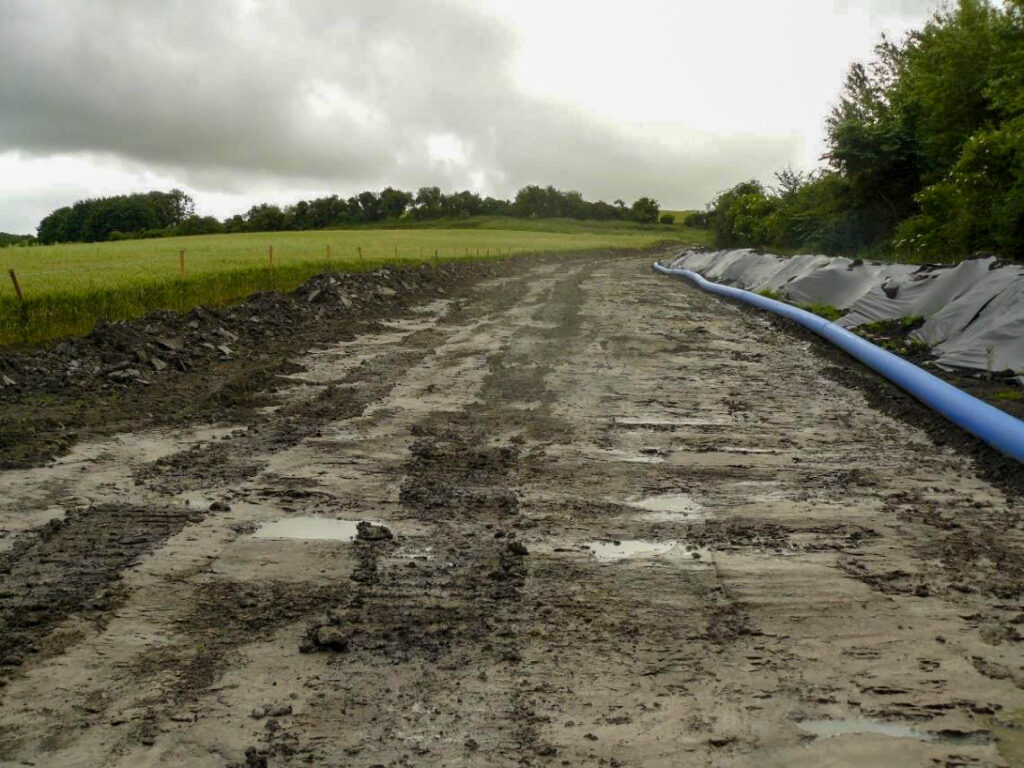
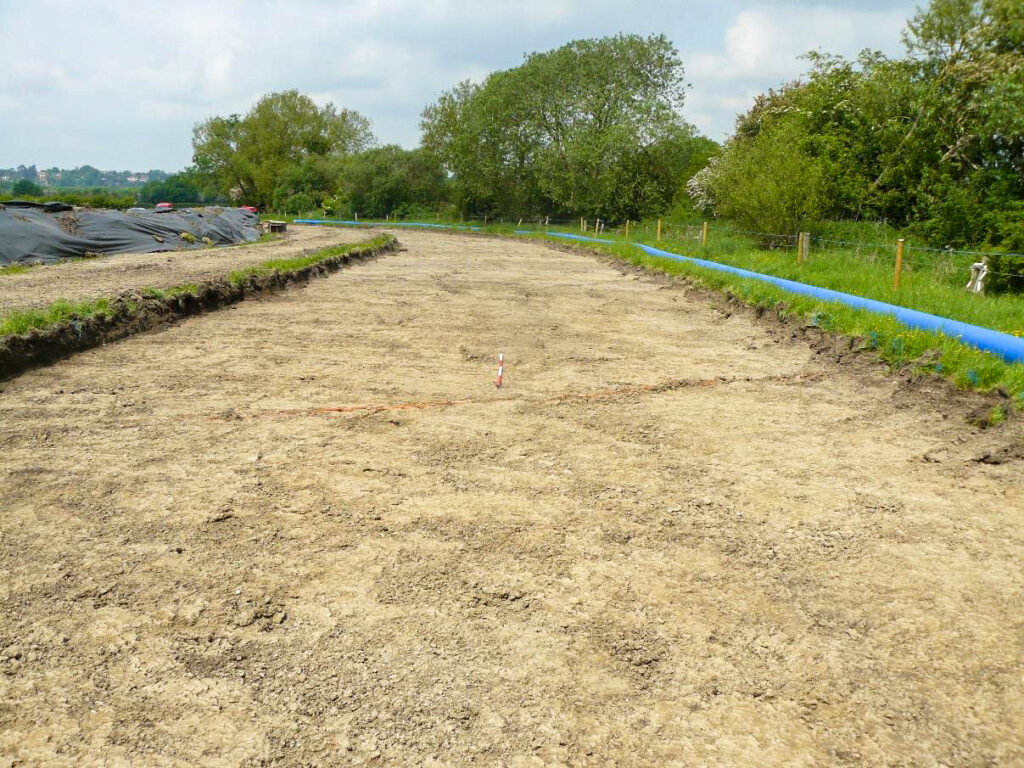
We were instructed on behalf of Thames Water to carry out archaeological observation of groundworks and consequent excavations relating to a pipeline reinforcement programme extending some 3.1km through fields from Overtown Reservoir Overtown to Wroughton, Swindon.
In Brief
Key Points
- From the Archives
- Large number of prehistoric features revealed which resulted in full excavation
- Large pottery assemblage was dated by form and fabric to the Late Bronze Age
- Storage pits to the NE contained pottery and flint and bone tools
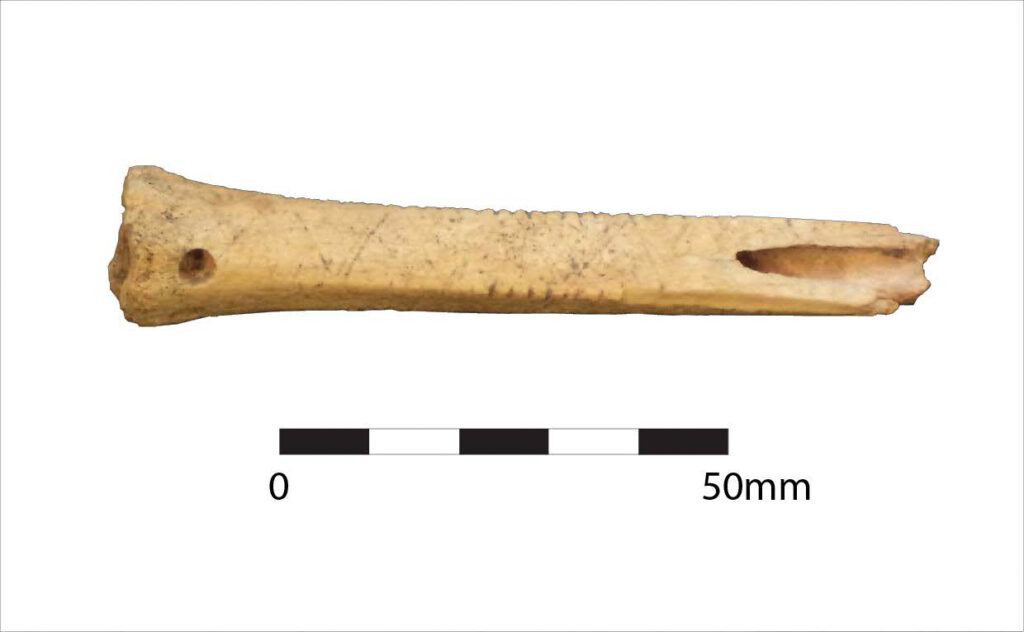
- A number of bone and antler objects were recovered, including a highly decorated small pointed blade often interpreted as a spearhead
Summary
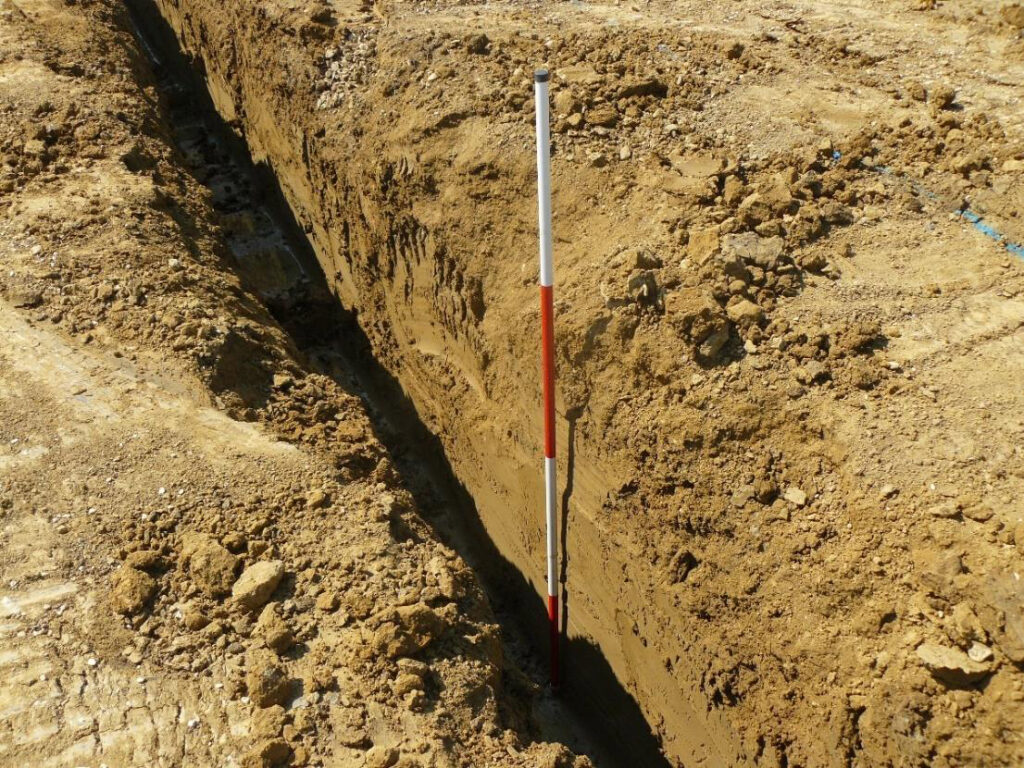
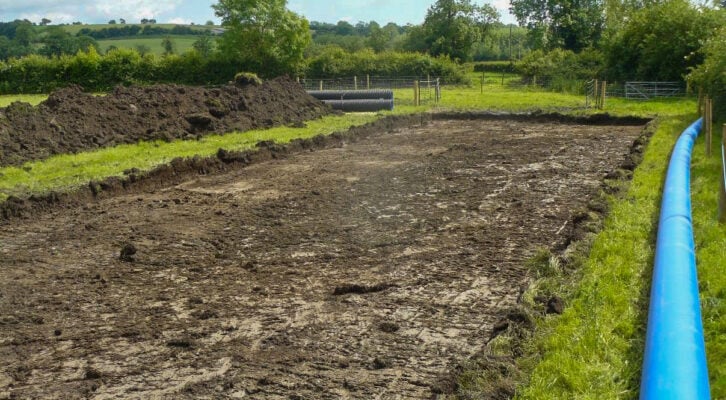
Groundworks observation began at the southern extent of the pipeline route in Field 9 and revealed a large number of prehistoric features. An excavation programme was thus implemented in consultation with the County Archaeologist for Wiltshire Council to fully investigate and record these features.
Further observation of groundworks was subsequently carried out over the remainder of the pipeline route, which crossed arable land to the east of Wroughton.
Results
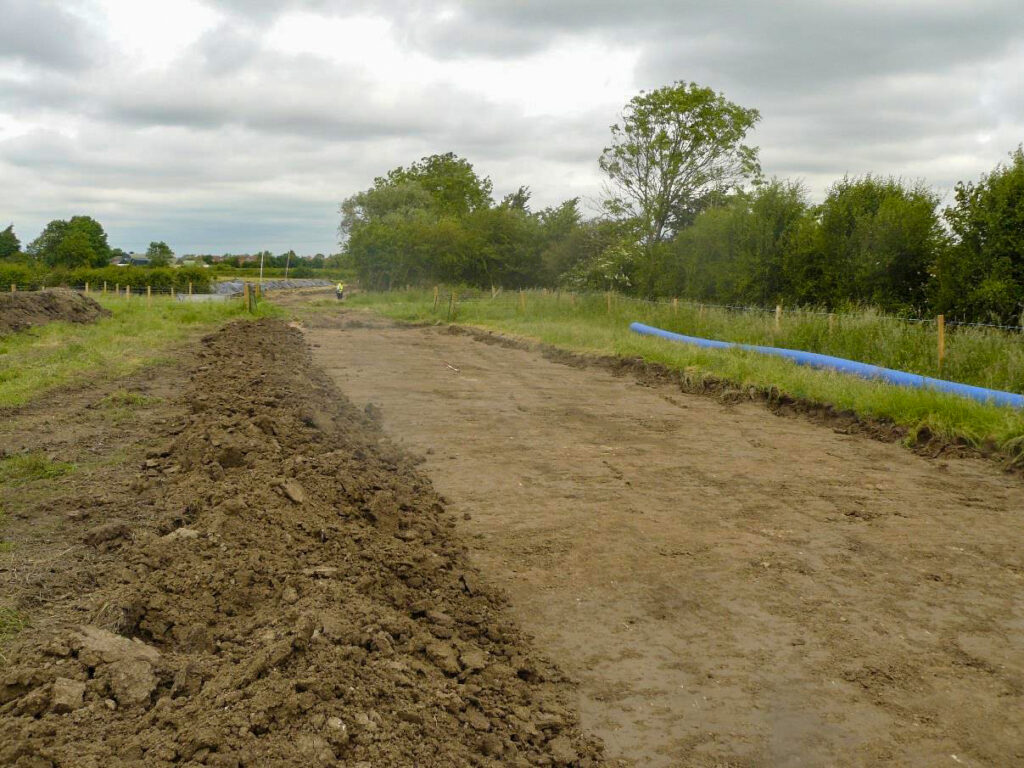
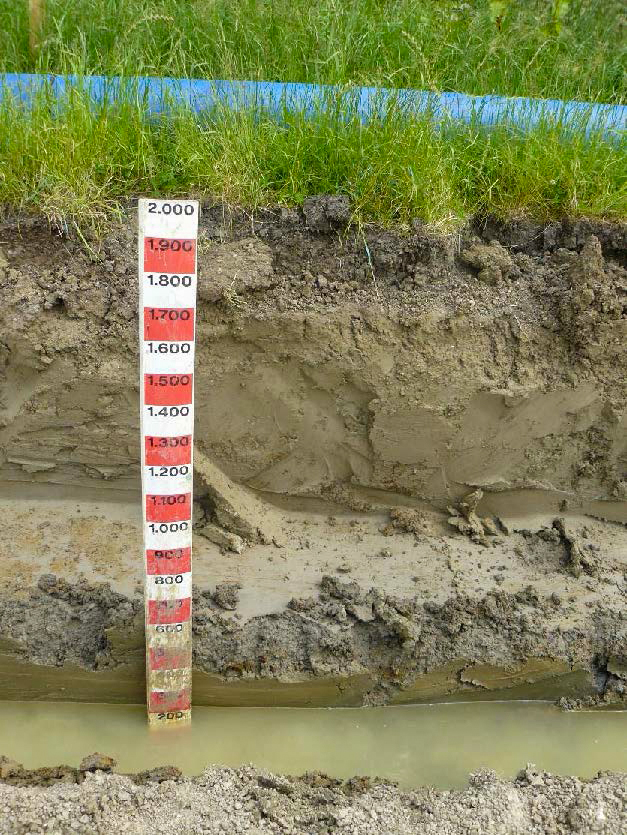
Fields 1 to 6 were located on relatively low-lying ground prone to waterlogging. Occasional finds of Roman and medieval date were identified within this area in a residual context. Post-medieval features identified were predominantly associated with arable activity and included land drains with surviving areas of ridge and furrow cultivation identified in Field 3. The possible remains of a field barn were identified in Field 3, close to the hedge-line with Field 4, which were also of post-medieval date.
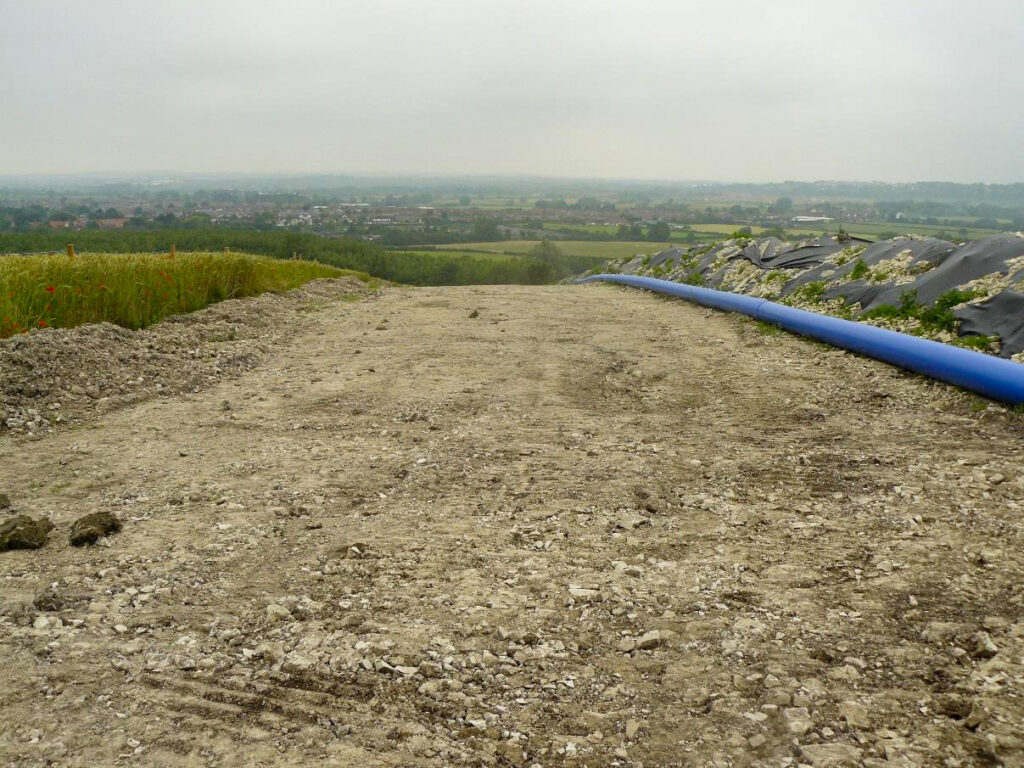
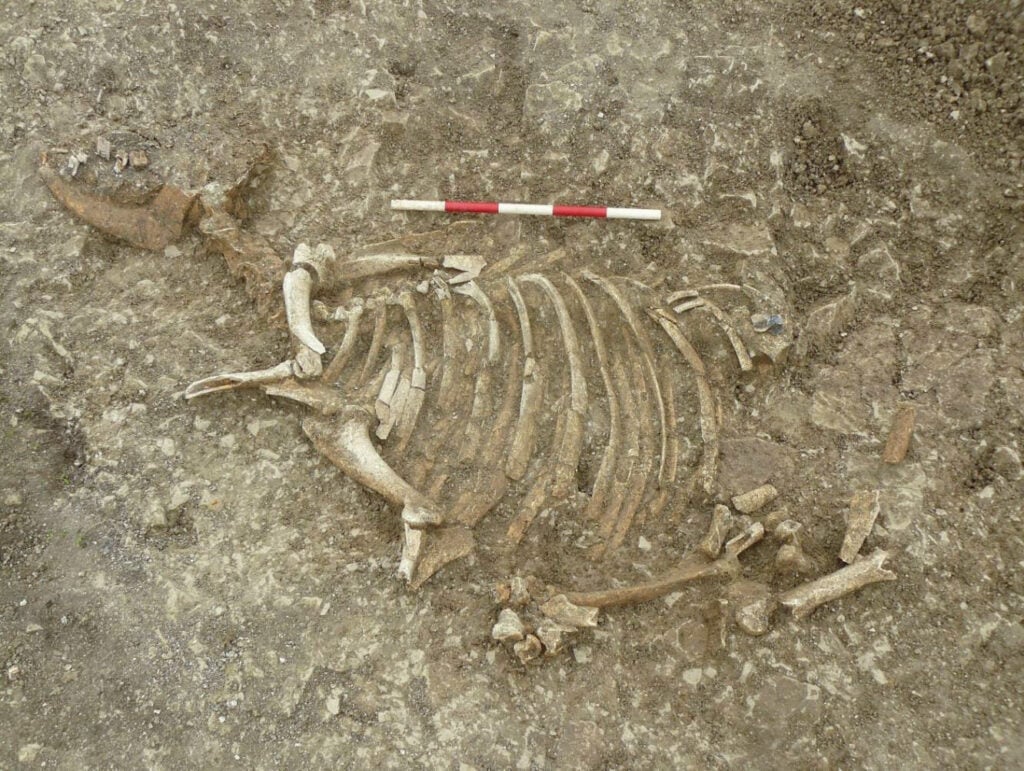
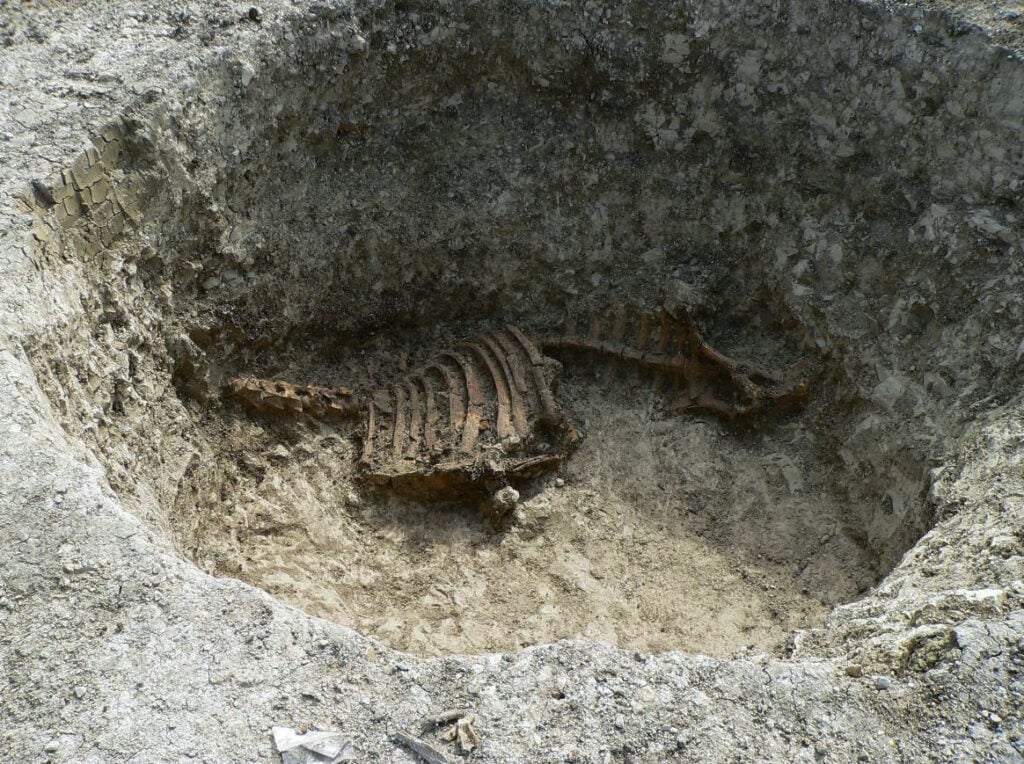
Fields 7 to 9 were located on a north-facing slope and were characterised by thin soils overlying chalk or limestone bedrock. A single feature was identified in Field 8, comprising an articulated cattle skeleton buried in a shallow scrape where the slope levelled out.
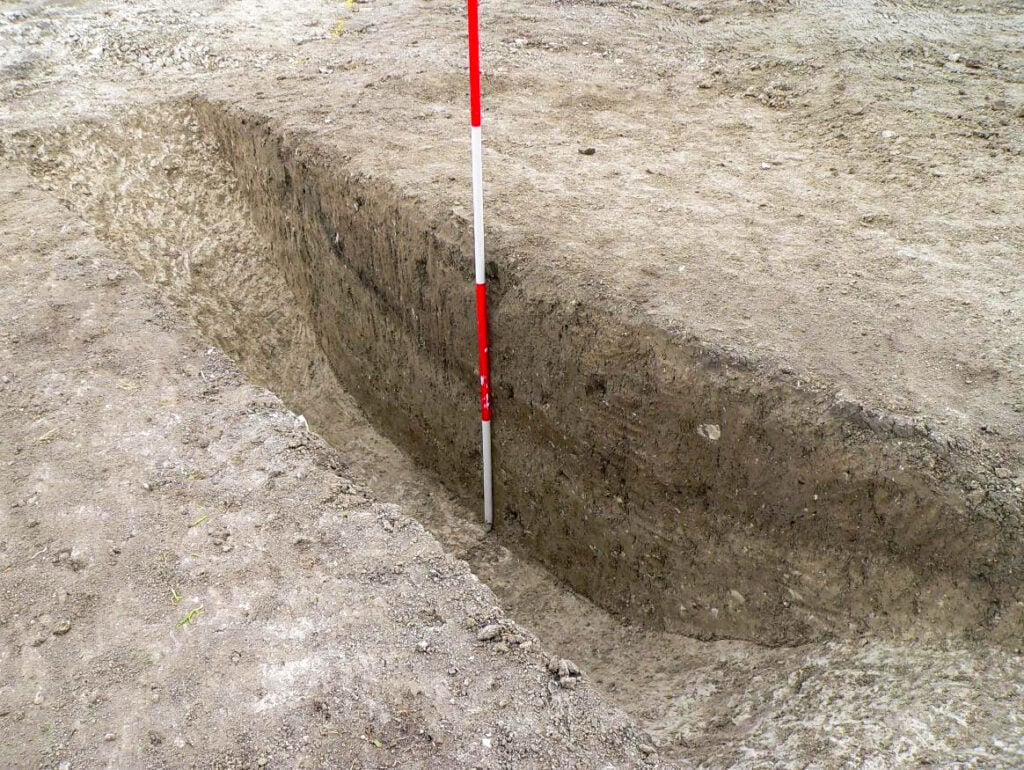
The south-western extent of the area revealed a number of shallow, probably plough-damaged drainage ditches and a very large land boundary ditch on consistent north-south or east-west alignments. A reasonably large pottery assemblage was recovered from these features and dated by form and fabric to the Late Bronze Age though radiocarbon dates from two pit features, one with a large pottery assemblage, returned Middle Iron Age dates. This implies a long tradition of fabric and form in this region.
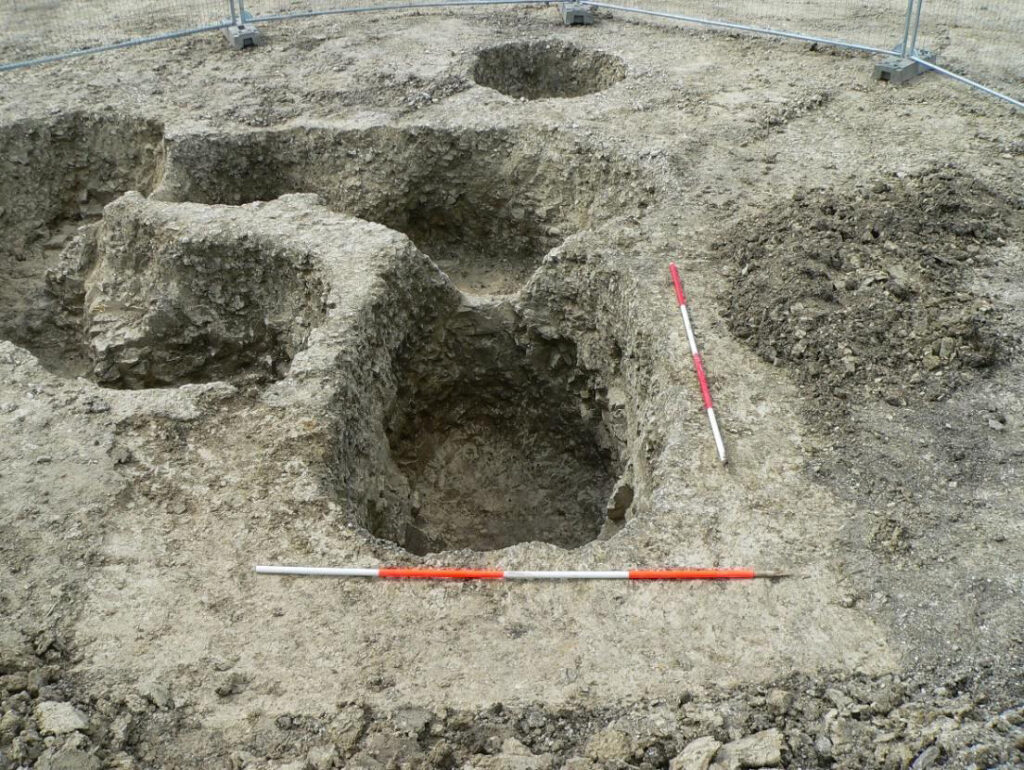
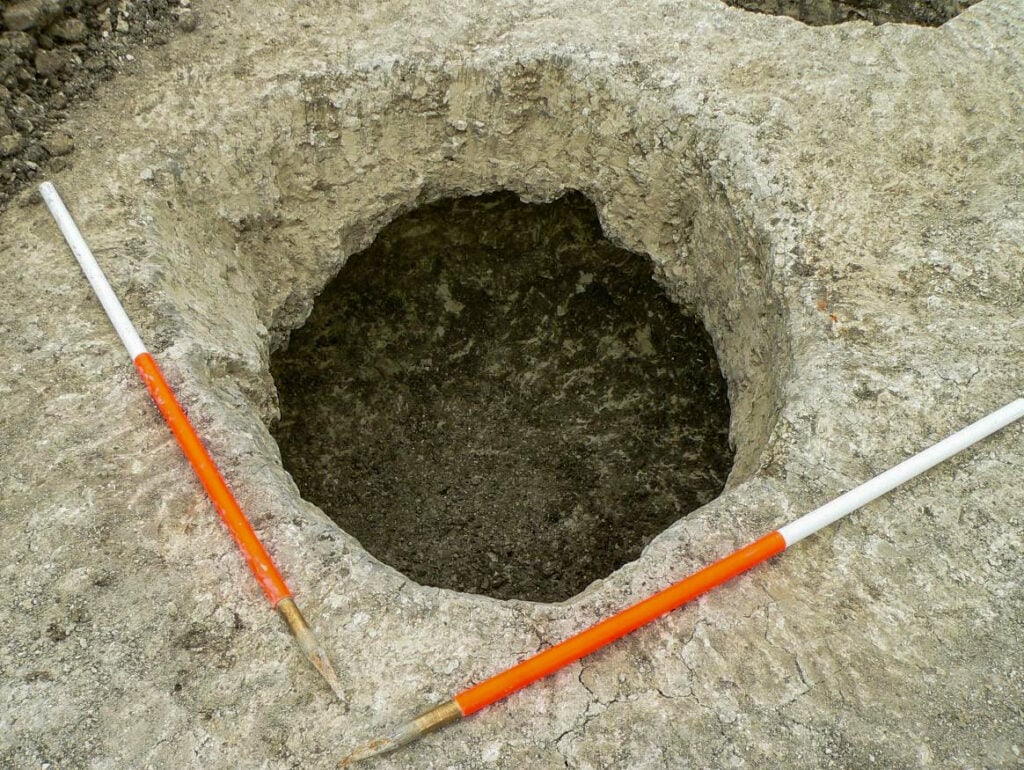
The north-eastern extent of Field 9 contained a large number of sub-circular, probable grain-storage pits of a broadly similar form bounded by a ditch to the southwest. Analysis of the contents of these features revealed that spelt wheat and hulled six-row barley were the main crops stored at the site.
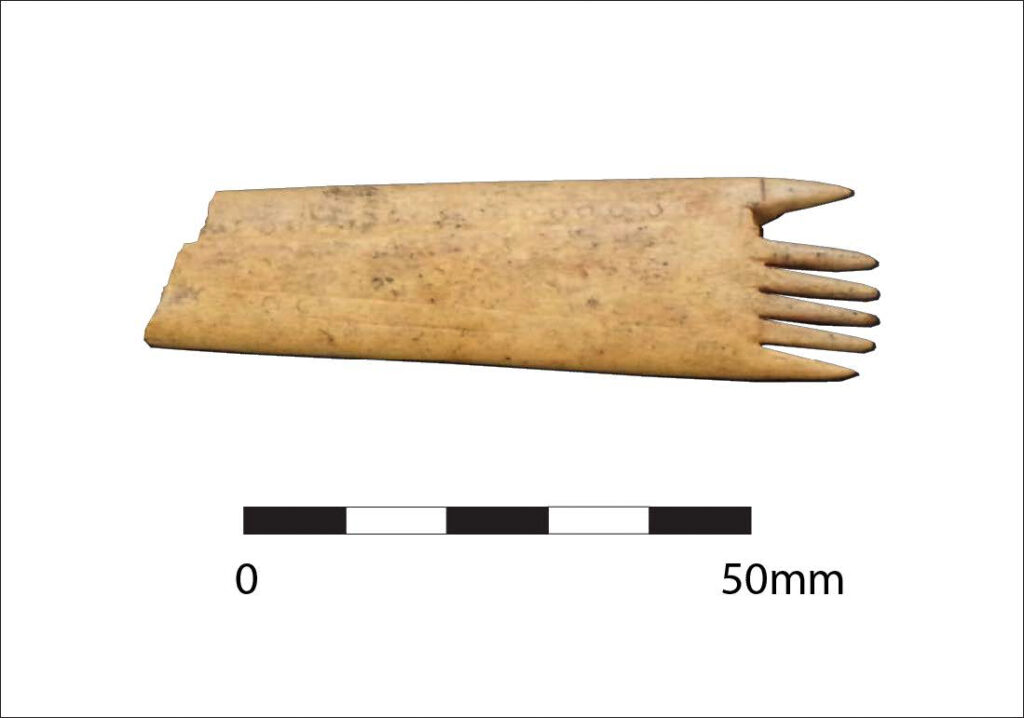
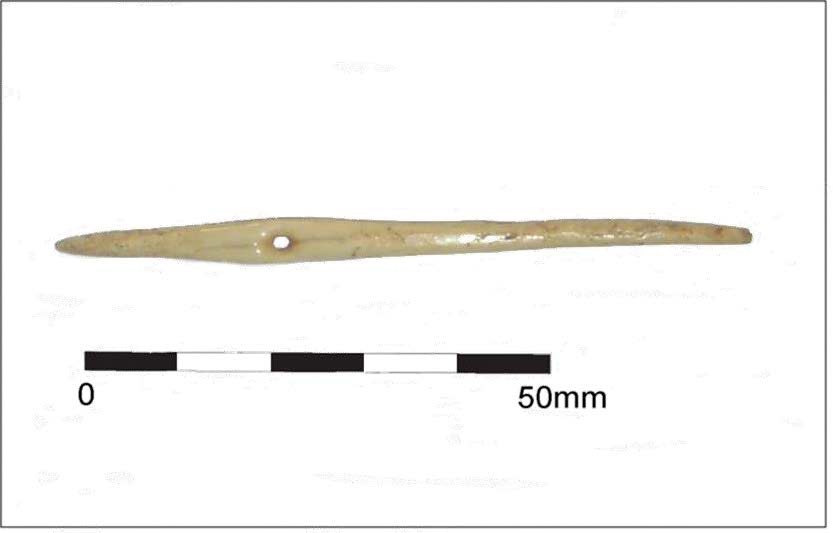
These storage pits had evidently been later reused as middens. Evidence of occupation nearby was extensive and included fragments of daub and rhizomes of the type used for fuel or roofing turves. Large quantities of pottery were recovered from these features, in addition to a number of flint and bone tools, including bone needles and a leather punch, possibly associated with local leatherworking activity.
Large quantities of animal bone were found, including an articulated cattle burial within the base of one pit, suggesting a possible votive deposit. Evidence of sheep -or goat -herding was suggested by large quantities of caprovid bones, with lesser quantities of cattle, horse and dog found. A number of bone and antler objects were recovered, including a highly decorated small pointed blade, often interpreted as a spearhead, which is of regional importance.
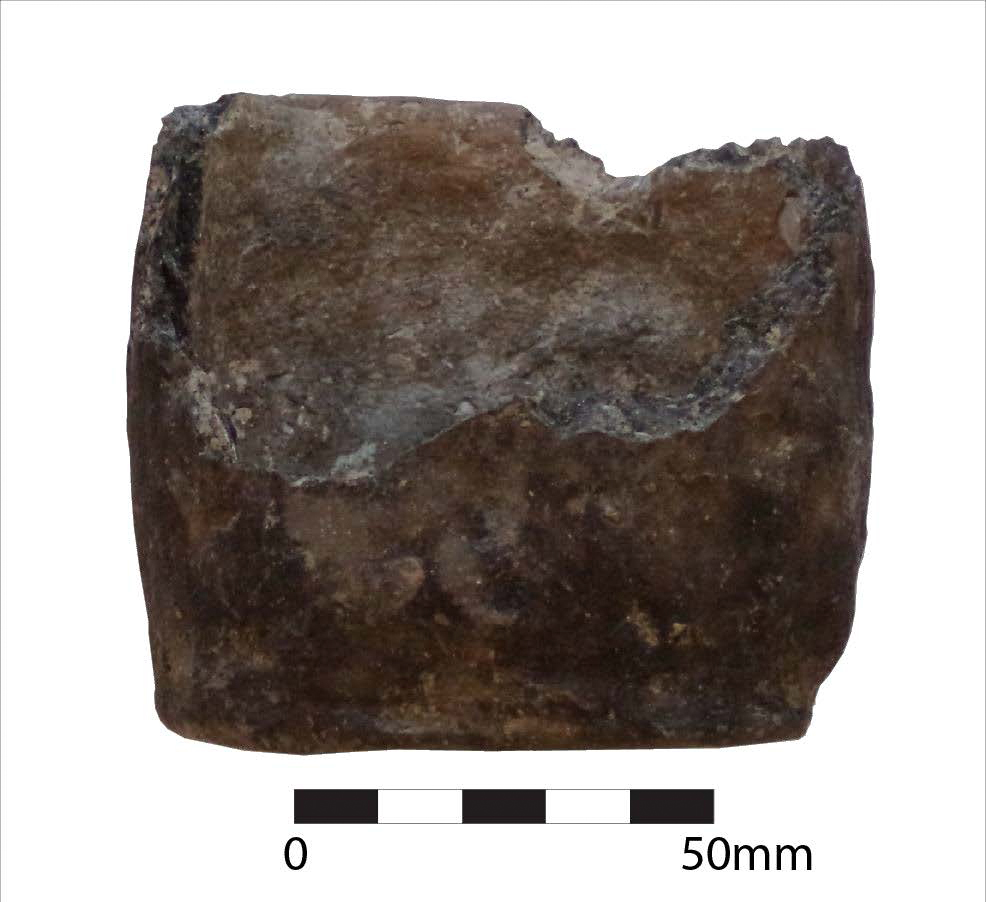
One Roman imbrex (roofing tile), iron objects and a Roman brooch fragment and a few later Saxon sherds of pottery were recovered from a ditch in Field 9, indicating a human presence in these periods in the vicinity.
Based upon the results of this programme of archaeological fieldwork, there would appear to be considerable potential for the discovery of further finds and features of archaeological significance in the vicinity of Overtown Hill.
This hilltop site evidently represented a favourable location attracting occupation over a considerable period, as attested by the nature of the excavation results obtained in Field 9, with a substantial post-Roman land boundary feature identified together with evidence for the existence of later Bronze Age settlement on the northern slope of Overtown Hill. It is unclear whether the hilltop itself was occupied during the Bronze Age to Middle Iron Age, and also during the Roman period, as this fell outside of the scope of this study.